
Hoarding Cleanup in Las Vegas: A Compassionate, Discreet Approach
A hoarded home is rarely about the stuff. Behind almost every heavily cluttered house in the Las Vegas Valley is a person going through something hard — grief, illness, aging, a mental-health struggle — and a family that loves them and doesn’t know where to start. If you’re reading this because a parent’s Summerlin home has become unsafe, or because you’re a Henderson property manager who just opened a unit and stepped back in shock, take a breath. This is a solvable situation, and it can be handled with dignity.
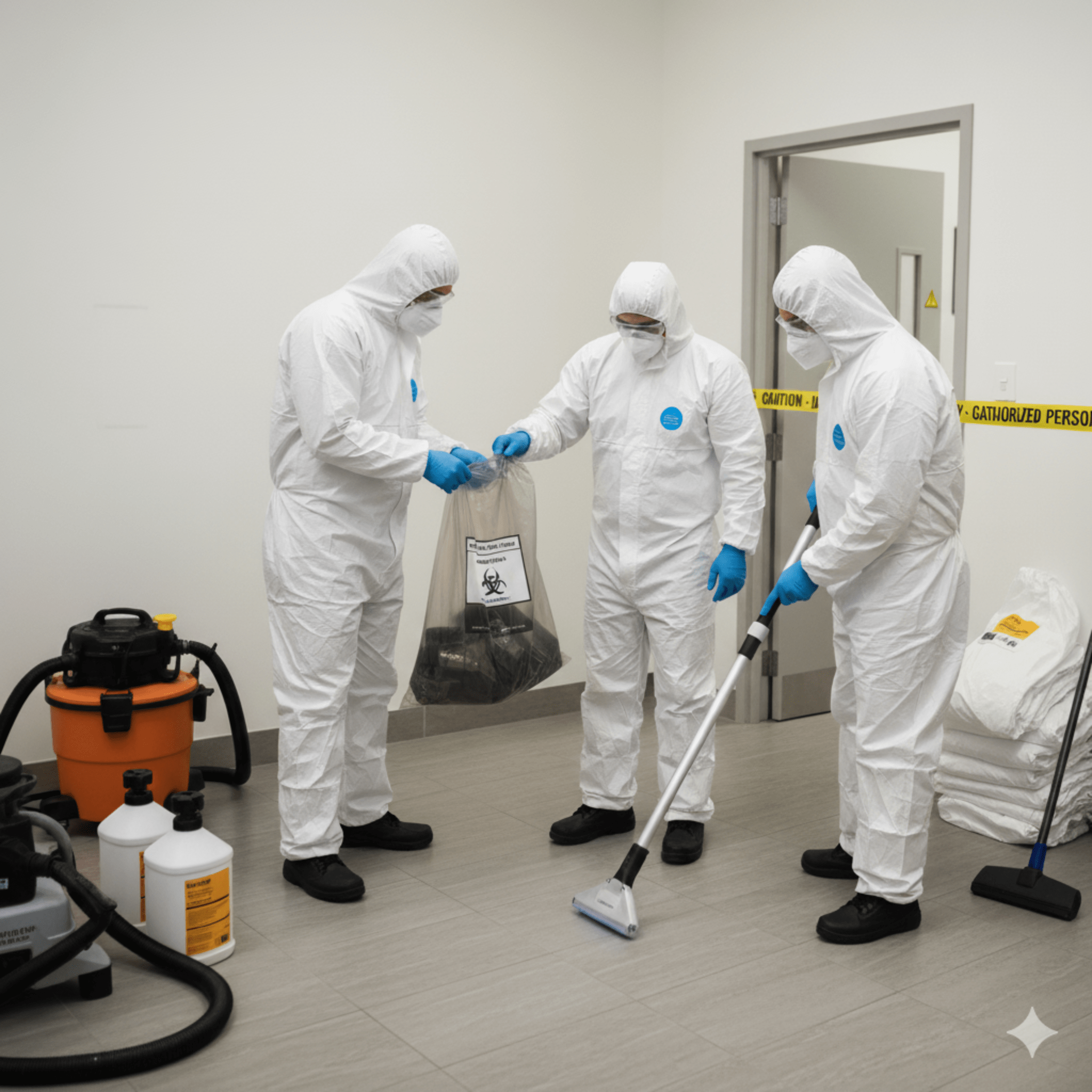
Hoarding cleanup is not the same as a big trash-out. Done right, it’s a careful, respectful process that protects the person’s health, their belongings, and their sense of control — while addressing the real biohazards that build up when a space hasn’t been maintained for months or years. It sits inside professional biohazard and trauma cleanup work for exactly that reason: the hazards are real, and the human situation calls for a gentle hand.
This guide covers what separates ordinary clutter from a true hoarding condition, the health and biohazard risks involved, how a compassionate cleanup unfolds, how we protect privacy, how families and property managers fit in, and what the work realistically costs in the Vegas Valley.
- Clutter vs. hoarding: clutter is messy but navigable; hoarding blocks the normal use of rooms and creates safety and health hazards.
- It’s a biohazard job, not just a haul-away: long-term accumulation brings mold, pests, rodent droppings, and human or animal waste that need proper handling.
- Golden rule: the person keeps the right to make decisions about their belongings — we sort with them, never dump behind their back.
- Discretion is standard: unmarked considerations, no lawn pile of belongings, and privacy respected from the first phone call.
- Cleanup ≠ cure: we handle the physical space to a professional standard; ongoing support for the underlying condition comes from mental-health resources.
- Handled to standard: Pinpoint works with EPA-registered disinfectants and OSHA-guided PPE and containment — Nevada License #0084981.
- Clutter vs. hoarding: where the line really is
- The health and biohazard risks that build up
- A compassionate, non-judgmental process
- Discretion and privacy, from the first call
- Working with family and property managers
- Sorting and salvage vs. disposal
- Deep cleaning and deodorizing the space
- What hoarding cleanup costs in Las Vegas
Clutter vs. hoarding: where the line really is
Almost every home gets cluttered — a garage fills with boxes, a spare room becomes a catch-all, the mail piles up. That’s normal life, and a weekend of effort usually fixes it. Hoarding is a different thing, and the distinction matters because it changes what the space needs.
The practical dividing line is function and safety. Clutter is messy but you can still use the room for what it’s meant for. A hoarding condition means the accumulation has taken over to the point that spaces can no longer serve their purpose — you can’t cook in the kitchen, sleep in the bed, or walk a clear path to the door. When belongings block exits, cover the stove, or hide the floor entirely, the situation has crossed from cluttered into hazardous.
A few signs that separate a true hoarding condition from ordinary mess:
- Blocked pathways and exits — narrow “goat trails” between piles, doors that won’t fully open, windows covered over.
- Rooms that can’t do their job — sinks, tubs, or stoves buried and unusable; appliances that stopped working long ago.
- Spoilage and waste — rotting food, overflowing trash, or areas where pets or a person have been relieving themselves because the bathroom is inaccessible.
- Strong distress at the idea of discarding — the belongings feel impossible to part with, even items most people would consider trash.
Recognizing that this is a hoarding condition rather than a tidiness problem is what points you toward the right kind of help. It isn’t a job for shame or a dumpster and a bad afternoon — it calls for a process built around both the person and the hazards.
The health and biohazard risks that build up
When a home hasn’t been fully cleaned or maintained for a long time, the risks stack up quietly. What looks from the doorway like “a lot of stuff” is often hiding conditions that genuinely threaten health — for the resident, for family members who visit, and for the crew who eventually clears it. This is why hoarding cleanup is treated as biohazard work.
Mold and moisture. Piles trap humidity, block airflow, and cover plumbing leaks that go unnoticed for months. Even in the dry desert climate, a slow leak under a buried sink or a covered window with condensation gives mold everything it needs. Our mold removal team frequently finds active growth behind stacks that hadn’t been moved in years.
Pests and rodents. Food residue and dense clutter are an open invitation. Cockroach droppings, rodent urine and feces, and nesting materials carry allergens and pathogens — hantavirus, salmonella, and others — and the debris has to be handled with the right protection, not swept up bare-handed.
Human and animal waste. In advanced cases, bathrooms become inaccessible or too many animals live in the home, and biological waste accumulates. That’s a Category 3 contamination situation requiring containment, EPA-registered disinfectants, and proper disposal — the same discipline used in sewage and trauma cleanup.
Air quality. Dust, mold spores, ammonia from concentrated waste, and decades of accumulated allergens make the indoor air itself a hazard. Crews wear respiratory protection for a reason, and residents are kept out of the active work zone until the area is cleaned.
Structural and fire hazards. The sheer weight of accumulation can stress floors. Blocked exits and material piled near the stove or heaters create a serious fire risk with no clear way out. Buried electrical cords and outlets add to it. These are the dangers that turn a private struggle into an emergency.
A compassionate, non-judgmental process
The single most important thing to understand about hoarding cleanup is that how the work is done matters as much as whether it gets done. A crew that shows up, treats the belongings as garbage, and bulldozes through can retraumatize the person and undo any progress the family has made. A calm, respectful crew can make the same space safe while preserving the person’s dignity and their trust.
That’s the approach we bring to every hoarding project in the Las Vegas Valley. In practice it looks like this:
- The resident stays in control. Wherever they’re able and willing to participate, decisions about what stays, goes, or gets donated are theirs. We move at a pace they can handle rather than steamrolling the day.
- No judgment, no lectures. Our technicians are there to work, not to comment on how the home got this way. People in this situation have usually heard enough of that already.
- Clear, gentle communication. We explain what we’re doing and why, especially around the biohazard steps, so nothing feels like it’s being done to them.
- Care with meaningful items. Photos, documents, keepsakes, cash, and heirlooms surface constantly in these homes. We watch for them and set them aside for the person rather than letting them disappear into a haul-away load.
It helps to name the honest limit here: cleaning the home addresses the physical space, not the underlying condition. Hoarding disorder is a recognized mental-health condition, and lasting change usually involves a therapist or support resources alongside the cleanup — so the home doesn’t quietly fill back up.

Discretion and privacy, from the first call
Shame keeps a lot of families from asking for help, so discretion isn’t a nice-to-have on these jobs — it’s part of doing them right. From the first phone call, the goal is to make it easy to reach out without feeling exposed to neighbors or the rest of the family. What that looks like on the ground in a Las Vegas neighborhood:
- Conversations stay confidential. Details about the home and the person are shared only with those you authorize.
- No spectacle on the street. We plan staging and removal to avoid a long, visible pile of belongings sitting out front for days. Sorting and containment happen thoughtfully, not on the driveway for the whole block to see.
- Respectful scheduling. Timing and vehicle placement can be arranged to keep a low profile where that matters to the family.
- Dignity for the resident. They’re spoken to as a homeowner and a person throughout — never as a problem to be processed.
If privacy is your biggest worry before picking up the phone, say so at the start. It’s a normal request on these projects, and it shapes how the whole job is arranged.
Working with family and property managers
Two very different people usually make the call for a hoarding cleanup, and each situation needs a slightly different touch.
Families. Often it’s an adult child or a sibling who has finally realized how far things have gone — sometimes after a fall, a hospitalization, or a code-enforcement notice. The delicate part is that the resident may be reluctant or not fully on board. We work with families to keep the resident involved and respected, to identify and protect the belongings that carry real meaning, and to pace the work so it’s firm about safety without becoming a confrontation. When the person feels included rather than overruled, the whole day goes better and the result lasts longer.
Property managers and landlords. The situation is different when a unit is discovered during an inspection, a turnover, or after a tenant has moved out or passed away. Here the priorities are getting the unit safe and rent-ready, documenting the condition, and handling any biohazards to standard before a new tenant moves in. We can document the work with photos and a clear scope, coordinate around lease and legal timelines, and address contamination — mold, waste, pests, odors — so the unit is genuinely restored, not just emptied. For units where a tenant has died, the work overlaps with trauma cleanup and is handled with the same care.
In both cases, the practical next step is the same: an on-site walkthrough so we can see the real scope and give you a straight answer. Reach out to Pinpoint and we’ll set that up discreetly.
Sorting and salvage vs. disposal
The heart of a respectful hoarding cleanup is the sorting process — the part that separates a compassionate job from a demolition. Rather than treating everything as trash, the work moves methodically, category by category, with the resident’s input wherever possible.
A common working framework sorts items into a few clear streams:
- Keep. Belongings the person wants and that are safe to retain. These are cleaned as needed and organized, not discarded.
- Donate or sell. Usable items in good condition the person is willing to part with — routed to donation rather than the landfill when possible.
- Recycle. Paper, metal, glass, and electronics diverted from the trash stream where facilities allow.
- Dispose. Spoiled food, soiled materials, contaminated items, and true refuse — bagged and hauled properly, with biohazard-contaminated material handled as regulated waste.
Two things get special attention. First, valuables and important documents: cash, jewelry, IDs, deeds, insurance papers, and family photos are routinely buried in these homes, so the crew watches for them and returns them to the person or family. Second, anything contaminated — items soaked with waste, mold, or pest droppings — usually can’t be salvaged safely and is disposed of as biohazard, a call we explain rather than make silently. The aim is always to keep what can be kept and to part with the rest in a way the person can live with.
Deep cleaning and deodorizing the space
Clearing the belongings only reveals the second half of the job. Under years of accumulation there’s almost always built-up grime, contamination, and odor that a normal cleaning can’t touch — and this is where the biohazard training earns its keep.
Once the space is cleared, the process typically runs like this:
- Removal of biohazards. Any human or animal waste, spoiled food, and contaminated debris is removed first, with proper PPE and containment so nothing spreads to clean areas.
- Cleaning and disinfection. Hard surfaces, floors, and fixtures are cleaned and treated with EPA-registered disinfectants to address bacteria, viruses, and other pathogens left behind.
- Mold and moisture. If mold turns up behind the piles, it’s addressed as its own remediation — contained and removed to the IICRC S520 standard — rather than just painted over.
- Odor removal. Deep odors from waste, decay, smoke, or pets don’t respond to air freshener. We use source removal plus techniques like specialized cleaning, air scrubbing with HEPA filtration, and treatments such as ozone or hydroxyl where appropriate to neutralize odor at the molecular level rather than mask it.
- Final detail and restoration. The space is detailed so it’s genuinely usable again. Where flooring, drywall, or fixtures were damaged beyond cleaning, we can handle the restoration to make the home livable.
The goal isn’t just a home that looks clear — it’s one that’s actually safe to breathe in and live in, with the contamination and odor gone at the source.
What hoarding cleanup costs in Las Vegas
Cost is one of the first questions families ask, and it’s a fair one. Hoarding cleanup varies more than almost any other restoration job because no two homes are alike — the price depends on the size of the space, the density of accumulation, the level of biohazard contamination, how much sorting is involved, and whether the home needs repairs afterward. The ranges below are realistic planning figures for the Las Vegas Valley.
| Scope of work | What it involves | Typical Las Vegas range |
|---|---|---|
| Light hoarding, single room | Sorting, haul-away, basic cleaning, minimal biohazard | $1,500 – $4,000 |
| Moderate hoarding, multiple rooms | Heavier sorting, larger haul, disinfection, deodorizing | $4,000 – $10,000 |
| Severe hoarding with biohazard | Waste/pest contamination, containment, extensive disinfection | $10,000 – $25,000+ |
| Whole-home, heavy contamination | Full clear-out, biohazard removal, odor treatment, monitoring | $20,000 – $50,000+ |
| Restoration (add-on) | Flooring, drywall, fixtures, paint after clear-out | $2,000 – $20,000+ |
These are planning ranges for the Las Vegas Valley, not a quote. Actual cost depends on the size of the home, the density and type of accumulation, the level of biohazard contamination, and any restoration needed. Some situations — particularly waste, mold, or trauma contamination tied to a covered event — may qualify for homeowners insurance coverage, and an on-site assessment gives you a real number and the documentation a claim needs.
From the field: The moment that sticks with our crews on hoarding jobs is almost never the mess — it’s the thing we find. A wedding ring in a coffee can. A stack of savings bonds inside a shoebox under three feet of newspaper. A daughter’s kindergarten drawings the resident thought were long gone. When you rush these homes, all of that ends up in the truck. When you go slow and treat every pile like it might hold something that matters, you hand people back a piece of their life along with a safe home. That’s why we sort instead of scoop — and why the family’s trust is worth more than a faster day.
Frequently asked questions
Is hoarding cleanup the same as regular junk removal?
No. Junk removal hauls away items; hoarding cleanup is a careful, respectful process that involves the resident in sorting, protects valuables and keepsakes, and addresses the biohazards — mold, pests, rodent droppings, and waste — that build up in a long-neglected home. It’s treated as biohazard work, with proper PPE, containment, and EPA-registered disinfectants, not just a truck and a crew.
Will you throw everything away without asking?
No. Wherever the resident is able and willing, decisions about what to keep, donate, or discard are theirs, and we work at a pace they can handle. Our crews watch for valuables, cash, documents, and family photos and set them aside rather than hauling them off. Only spoiled, soiled, or contaminated items that can’t be salvaged safely are disposed of, and we explain those calls rather than making them silently.
How do you keep a hoarding cleanup private?
Discretion is built into these jobs. Conversations stay confidential and details are shared only with people you authorize. We plan staging and removal to avoid a long, visible pile of belongings out front, and scheduling and vehicle placement can be arranged to keep a low profile. If privacy is your main concern, tell us at the first call and we’ll shape the whole job around it.
Does cleaning the home fix a hoarding disorder?
Cleaning addresses the physical space and the health hazards, but not the underlying condition. Hoarding disorder is a recognized mental-health condition, and lasting change usually involves a therapist or support resources alongside the cleanup. The most durable results come when a compassionate clearing of the home happens together with that ongoing support, so the space doesn’t gradually fill back up.
Can you handle a hoarded rental unit for a property manager?
Yes. We work with Las Vegas property managers and landlords to make a unit safe and rent-ready, document the condition with photos and a clear scope, and address any biohazards — waste, mold, pests, odors — to standard before a new tenant moves in. For units where a tenant has passed away, the work overlaps with trauma cleanup and is handled with the same care and discretion.
Do you get rid of the smell too?
Yes. Deep odors from waste, decay, smoke, or pets don’t respond to air fresheners, so we remove the source first, then use techniques like specialized cleaning, HEPA air scrubbing, and treatments such as ozone or hydroxyl where appropriate to neutralize odor at the molecular level rather than mask it. The goal is a home that’s genuinely safe to breathe in, not one that just smells covered up.
LOCAL. CERTIFIED. READY TO HELP.
Need Property Restoration or Cleanup in the Las Vegas Valley?
Whether it’s water damage, mold, asbestos, fire and smoke, or a biohazard situation, Pinpoint Property Services can help you understand the next step.
Contact Pinpoint Property Services Today for a Free Inspection:

