
Why Monsoon Storms Cause Sudden Water Damage in Las Vegas Homes
Most people picture Las Vegas as a perpetually dry desert city, but every summer—typically from July through September—the North American Monsoon pushes moisture up from the Gulf of California and transforms the valley into a flash-flood zone. The National Weather Service routinely issues Flash Flood Watches for Clark County during this period, and the consequences for homeowners can be severe and swift.
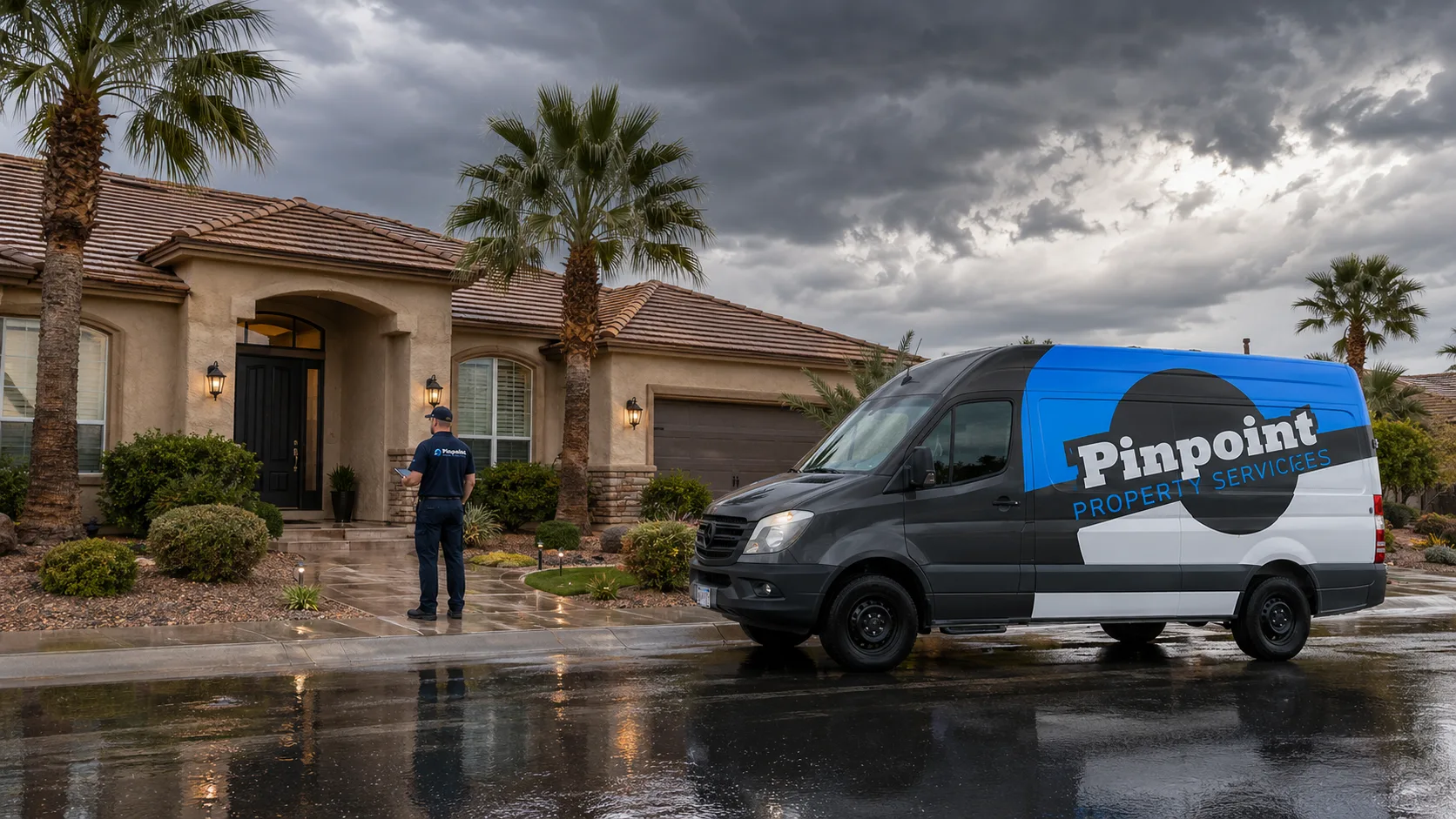
Several features of desert construction make Las Vegas homes especially vulnerable to monsoon water damage:
-
Flat and low-slope roofs. Many Las Vegas homes, particularly those built in the 1970s–2000s, rely on flat or nearly flat roofs designed for a dry climate. During a monsoon downpour—which can drop an inch or more of rain in under an hour—these roofs struggle to shed water fast enough, leading to ponding and eventual intrusion through seams, cracks, or aging membranes.
-
Clogged roof scuppers and drains. Desert dust, debris, and wind-blown plant material accumulate in roof scuppers all spring. When the first big monsoon storm hits, blocked drainage forces water to back up and find gaps in the roofing system.
-
Poor yard grading and drainage. Because rain is rare, many lots are not graded to channel water away from the foundation. A sudden downpour can overwhelm the landscaping and push water directly against—and through—block-wall foundations and garage floors.
-
Flash flooding. The hard, compacted caliche soil common to the Las Vegas Valley does not absorb water well. Runoff from mountains and hillsides arrives in neighborhoods as flash floods in a matter of minutes, forcing water through door gaps, window wells, and any low-lying entry point.
-
Aging stucco and window seals. Extreme heat cycles cause stucco to crack and window caulking to shrink and fail. What looks like a minor cosmetic flaw in June becomes a direct water-entry path in July.
For more on our full range of water damage restoration services throughout the region, visit our services page.
Early Warning Signs of Monsoon Water Damage
Water damage in desert homes can be deceptive—the outside dries fast, but moisture trapped inside walls, under flooring, and in ceiling cavities lingers. Catching these signs early is critical to limiting the scope and cost of repairs.
-
Water stains on ceilings or walls. A yellow or brown ring on drywall almost always indicates water has migrated through the structure. Even a faint stain means moisture reached building materials.
-
Bubbling or peeling paint. Paint separating from the wall is a reliable sign of moisture trapped beneath the surface.
-
Warped baseboards or flooring. Wood and laminate floors that buckle, cup, or feel soft underfoot have absorbed water. This can happen even when the surface looks dry.
-
Musty or earthy odors. A damp smell in a room that should be dry signals microbial activity in hidden wet materials.
-
Efflorescence on block walls or concrete. White chalky deposits on your foundation wall or garage floor indicate water is actively moving through the masonry.
-
Soft spots or sagging in drywall. Press lightly along ceiling lines and around window frames. Any give or spongy texture means the drywall has absorbed water.
-
Standing water or moisture in crawl spaces, garages, or utility rooms. Even a thin film of water in an enclosed space creates serious drying challenges.
If you notice any of these signs after a monsoon storm, treat it as an emergency. Call a professional the same day rather than waiting to see if it dries on its own.
What to Do in the First 24–48 Hours After Monsoon Water Damage
The actions you take immediately after water intrusion have a direct impact on restoration costs and the risk of secondary damage. Follow these steps as soon as it is safe to do so.
Step 1: Ensure Safety First
Do not enter a room with standing water until you have confirmed the electricity is off at the breaker panel. If you cannot safely reach the breaker, call the utility company. Never walk through floodwater indoors without knowing the electrical status of the structure.
Step 2: Stop the Water Source If Possible
If water is still entering through a roof breach, use buckets or plastic sheeting to limit spread. Do not attempt to access a wet roof during or immediately after a storm. If the entry point is a door, window, or foundation crack, place rolled towels or sandbags at the threshold to slow intrusion.
Step 3: Document Everything Before Touching Anything
Walk through every affected area and take photos and video of all visible water damage. Capture water lines on walls, wet materials, standing water depth, and any personal property that has been damaged. This documentation is essential for your insurance claim. Do this before moving or removing anything.
Step 4: Remove Standing Water Carefully
If it is safe to enter, use a wet-dry vacuum or mop to remove as much standing water as possible. Do not use a regular household vacuum. Avoid walking on wet flooring more than necessary to limit further damage and to reduce the risk of slipping.
Step 5: Move Belongings Out of the Affected Area
Relocate furniture, rugs, electronics, and personal items to a dry area. Place aluminum foil or plastic sheeting under furniture legs that must remain in the wet zone to prevent rust and tannin staining. Remove wet rugs and take them outside to prevent them from contributing additional moisture to the floor.
Step 6: Promote Airflow But Do Not Over-Rely on DIY Drying
Open windows and doors if outdoor conditions allow and run ceiling fans. This helps with initial surface evaporation but is not a substitute for professional drying equipment. Consumer-grade fans and dehumidifiers move far less air volume than the commercial-grade equipment used by certified restorers, and they cannot reach moisture inside wall cavities or under subfloor assemblies.
Step 7: Call a Certified Water Damage Restoration Professional
Contact a restoration company as soon as possible—ideally within hours, not days. Pinpoint Property Services offers 24/7 emergency response with on-site arrival within 60 minutes throughout the Las Vegas Valley. Call us the moment you identify water intrusion so we can begin moisture assessment right away.
Why the 48-Hour Window Is Critical: The Race Against Mold
Water damage is not a problem that improves with time. Once building materials become saturated, a clock starts running. Under typical Las Vegas summer conditions—high heat and humidity during monsoon season—mold colonies can begin forming in as little as 24 to 48 hours on wet drywall, insulation, wood framing, and flooring materials.
This is not a hypothetical risk. It is a well-documented process addressed directly in the IICRC S500 Standard for Professional Water Damage Restoration, the industry’s governing technical standard. The S500 classifies water damage by category and class specifically because response time and material wetness directly determine what can be dried in place versus what must be removed and replaced.
Every hour that wet materials remain undried increases the likelihood that:
-
Drywall must be cut out rather than dried in place, increasing labor and material costs
-
Wood framing absorbs enough moisture to support microbial growth, requiring treatment
-
Flooring materials delaminate or swell beyond salvage
-
Mold remediation becomes a necessary additional scope of work
Fast professional response is not upselling—it is the single most effective cost-control measure available after a water loss event. A home that receives professional extraction and drying within the first few hours almost always costs significantly less to restore than one that waited even 24 hours.
How Pinpoint Property Services’ Water Damage Process Works
Pinpoint Property Services follows the IICRC S500 Standard for Professional Water Damage Restoration at every job. Here is what that process looks like from first call to final walk-through.
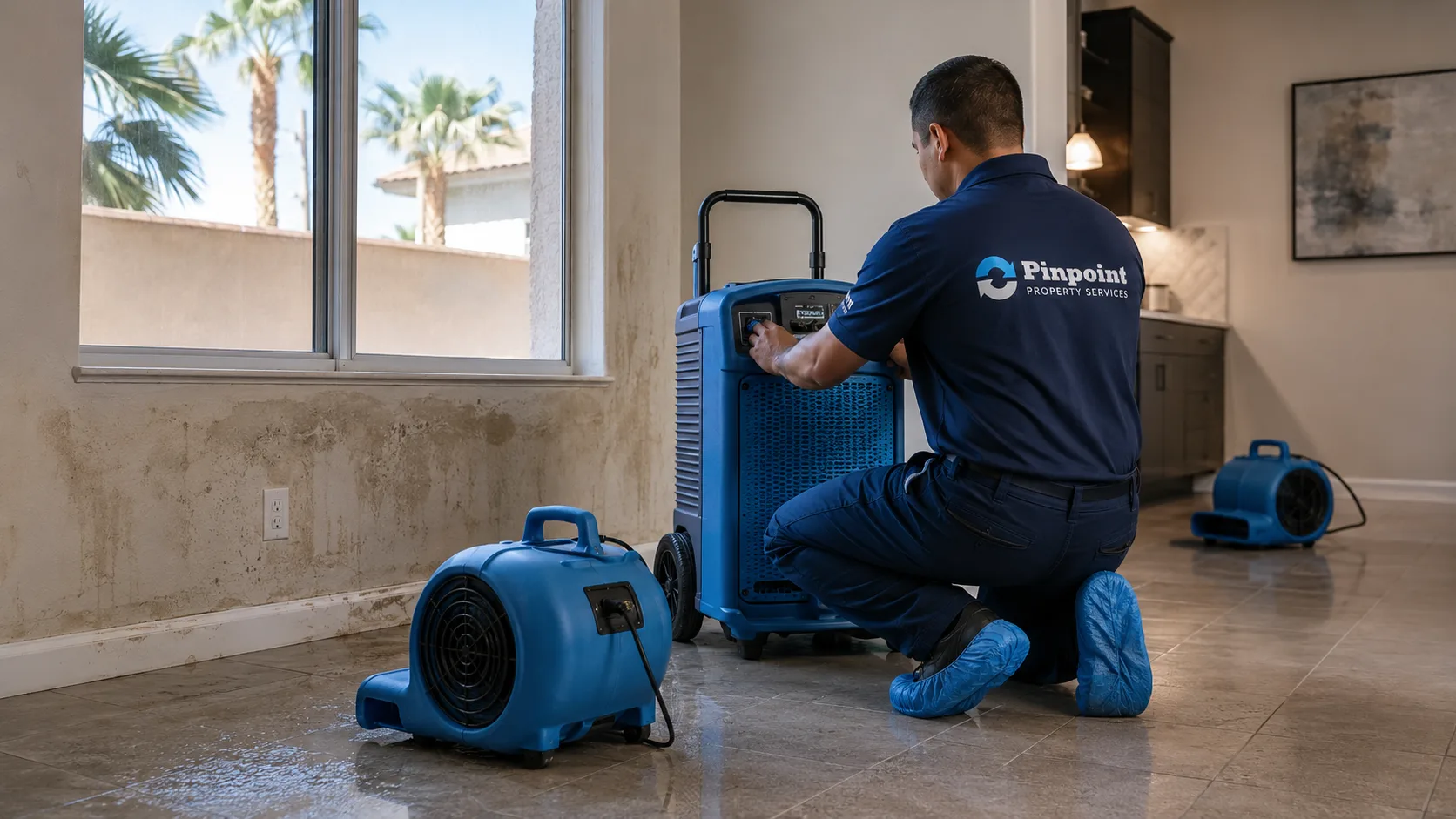
Emergency Response and Free Inspection
When you call, our crew mobilizes immediately. We offer a free on-site inspection and arrive within 60 minutes, any time of day or night, 365 days a year. Our technicians arrive with moisture meters, thermal imaging cameras, and a full extraction and drying payload on the truck—so the work begins the moment we arrive, not after a second trip.
Water Extraction
We use truck-mounted and portable extraction units to remove standing and absorbed water from floors, carpets, and subfloor assemblies. Thorough extraction removes the bulk of the moisture load before drying begins, dramatically shortening dry times and reducing structural stress on materials.
Structural Drying
Industrial-grade air movers and low-grain refrigerant (LGR) dehumidifiers are positioned throughout the structure according to a drying plan developed from our initial moisture readings. These systems work together to drive moisture out of wall cavities, flooring systems, and ceiling assemblies—not just from surfaces. For closed wall cavities, we may use injection drying systems or strategic non-destructive openings to ensure complete drying.
Moisture Monitoring
We return daily to record moisture readings throughout the structure using calibrated meters and thermal imaging. Drying is not complete until all readings return to pre-loss or acceptable ambient levels. Every visit is documented, and monitoring data is provided directly to your insurance carrier.
Restoration
Once the structure is confirmed dry, we repair and restore affected materials—drywall, insulation, flooring, paint, and trim—to pre-loss condition. Our goal is a seamless finished product: you should not be able to tell water damage ever occurred.
Learn more about our Las Vegas restoration services and the full range of recovery work we perform throughout Clark County.
Insurance Coverage for Monsoon Water Damage
One of the most common concerns homeowners have after a monsoon storm is whether their insurance will cover the damage. The good news: most standard homeowners insurance policies in Nevada do cover sudden and accidental water damage caused by storm events, including roof leaks from storm damage, window failures, and water intrusion caused directly by a storm.
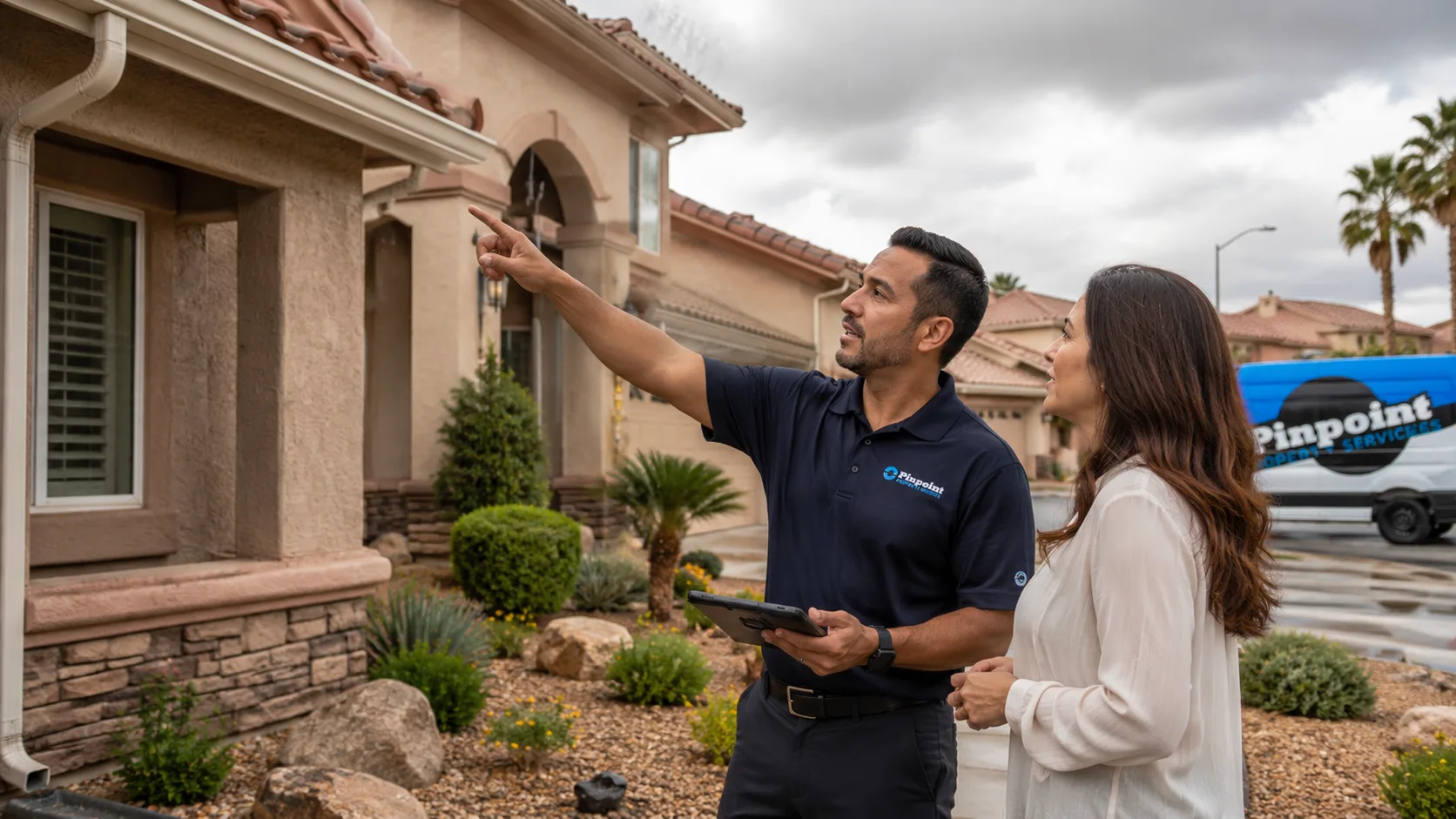
A few important points to understand:
-
Storm-caused water damage vs. flooding. Standard homeowners policies generally cover water that enters through a storm-damaged roof or wall. However, water that enters from the ground up—such as flash floodwater rising into the home—typically requires a separate flood insurance policy through the National Flood Insurance Program (NFIP) or a private flood carrier. If you live in a lower-elevation area of the Las Vegas Valley or near a wash, it is worth reviewing your policy before monsoon season begins.
-
Document before you clean up. As described in the steps above, photos and video are essential. Do not throw away damaged materials until your adjuster has had a chance to inspect, or at minimum until you have thorough photographic records.
-
Pinpoint bills carriers directly. We work with all major homeowners insurance carriers and bill them directly, which removes the administrative burden from you during an already stressful situation. We can also assist with the documentation your adjuster will need.
-
Act quickly for claim purposes too. Most policies require prompt notice of a loss. Delaying remediation can be interpreted as failure to mitigate damage, which can affect claim outcomes.
If you have questions about the insurance process, call us at any hour—helping homeowners navigate the claims process is part of what we do.
Monsoon Season Water Damage Prevention Tips
The best water damage is the one that never happens. Here are the most effective steps Las Vegas homeowners can take before and during monsoon season to reduce their risk.
Before the Season Starts (May–June)
-
Inspect and clear roof scuppers and drains. This is the single highest-impact preventive step for flat-roof homes. Remove all debris from scupper boxes, downspouts, and any rooftop drainage outlets. Test them with a garden hose to confirm flow.
-
Walk your roof or hire an inspector. Look for cracked or bubbled roofing membrane, open seams at flashings and penetrations (HVAC curbs, vents, skylights), and any areas where the membrane has lifted or separated. A $200–$400 roof inspection before monsoon season is cheap insurance.
-
Check and re-caulk windows and doors. Dried-out caulking around frames is one of the most common entry points for monsoon rain. Re-apply exterior-grade caulk anywhere you see gaps, cracks, or old caulk that has pulled away from the surface.
-
Evaluate your yard grading. Water should flow away from your foundation, not toward it. If you have any low spots adjacent to the house that collect water, address them with fill, regrading, or a channel drain before storm season.
-
Clean gutters and downspouts. Even in Las Vegas, gutters accumulate desert dust and debris. Make sure downspouts terminate at least several feet from the foundation and that the splash block or drain pipe directs water away from the structure.
-
Know where your main water shut-off is. In any water emergency, being able to quickly shut off the main line can limit damage from a secondary source (like a pipe that backs up during a flood event).
During and Immediately After a Storm
-
Do not drive or walk through flooded streets. Turn around, don’t drown. Six inches of moving water can knock a person down; twelve inches can carry a vehicle.
-
Check your roof after major storms. Do a visual inspection from the yard or access the roof carefully once conditions are safe. Look for pooling water, lifted flashing, or debris blocking scuppers.
-
Move valuables and electronics off the floor in garages and rooms adjacent to wash areas or low-lying ground if a significant storm is forecast.
-
Call for a free inspection if you have any doubt. Even if you don’t see obvious damage, hidden moisture can develop into a larger problem within days. Our free inspection gives you a definitive answer—not a guess.
Frequently Asked Questions
Need Restoration or Environmental Cleanup in the Las Vegas Valley?
Whether it is water damage, mold, asbestos, fire and smoke, or a biohazard situation, Pinpoint Property Services can help you understand the next step.
Contact Pinpoint Property Services Today for a Free Inspection:
📞 Call Us 24/7: +1 702 869 3030
🌐 Schedule Online: Book a Free Inspection at pinpointlv.com
Our certified, locally owned team handles the work from start to finish, with free, no-pressure inspections and direct insurance billing on covered claims.
Precise Solutions, Clean Results.
See What Your Neighbors Say About Us!
We pride ourselves on fast, reliable restoration services for homeowners, property managers, and businesses across the Las Vegas Valley.
Check out our Google Business Profile to read local reviews or leave feedback on our team's response:
⭐ Read Our Latest Reviews: View Pinpoint Customer Testimonials on Google
✍ Have We Serviced Your Home? Leave Pinpoint a 5-Star Review on Google