
A sewage backup isn’t just a bad mess — it’s a biohazard. Raw sewage (“black water”) is loaded with bacteria, viruses, and parasites, and it can release toxic gases as it sits. For a Las Vegas homeowner, the right response is to stay out of it, stop it spreading, and call a crew equipped to decontaminate the space safely. This guide covers the real dangers, the immediate steps, how professional cleanup works, what it costs, and how to keep it from happening again.
Quick Facts
It’s Category 3 “black water”: Assume everything sewage touched is contaminated — it carries E. coli, hepatitis A, norovirus, and parasites.
Do first: Keep people and pets out, shut off water and (if safe) power to the area, and turn off the HVAC so it doesn’t circulate contaminated air. Don’t run fans.
Not a DIY job: Safe cleanup needs PPE, extraction, disinfection, and proper biohazard disposal — this is our biohazard cleanup lane.
Who handles it: Pinpoint is an IICRC-certified team (Nevada license #0084981) on 24/7 emergency response across the Las Vegas Valley — 702-869-3030.
Move fast: Pathogens multiply and mold can start within 24–48 hours.
In This Guide
Why a sewage backup is so dangerous
When sewage backs up into a home, it’s a health hazard first and a property problem second. Raw wastewater teems with bacteria like E. coli, viruses such as hepatitis A and norovirus, and parasites like Giardia — and even a small amount spreads pathogens fast across floors and porous materials.
Health risks
Exposure can cause anything from gastrointestinal illness to serious infections, and direct contact with cuts or abrasions invites skin infections. As organic matter decomposes, it also releases gases like methane and hydrogen sulfide that can cause headaches, dizziness, and — in enclosed spaces at high concentration — far worse. The EPA’s overview of sanitary sewer overflows is a useful background read.
Property damage
Contaminated water seeps into flooring, carpet, drywall, and subfloor, corrodes metal fixtures, and creates an ideal environment for mold within a day or two. Left untreated, the odor alone can make a home temporarily uninhabitable.
Immediate steps after a backup
- Keep everyone clear. Get children and pets out of the area and don’t enter without protective gear — assume everything sewage touched is contaminated.
- Shut off utilities if safe. Turn off the water supply to stop more from entering, and shut off power to the affected area only if you can reach the panel without standing in water.
- Contain it. Close doors to the flooded rooms and block gaps at the bottom to keep it from spreading.
- Turn off the HVAC and don’t run fans. Both can aerosolize contaminated water and spread pathogens through the house. Open a window for airflow instead.
- Call for professional help. Sewage cleanup is a biohazard job — the sooner a trained crew is on the way, the less it spreads.
Why it’s not a DIY job
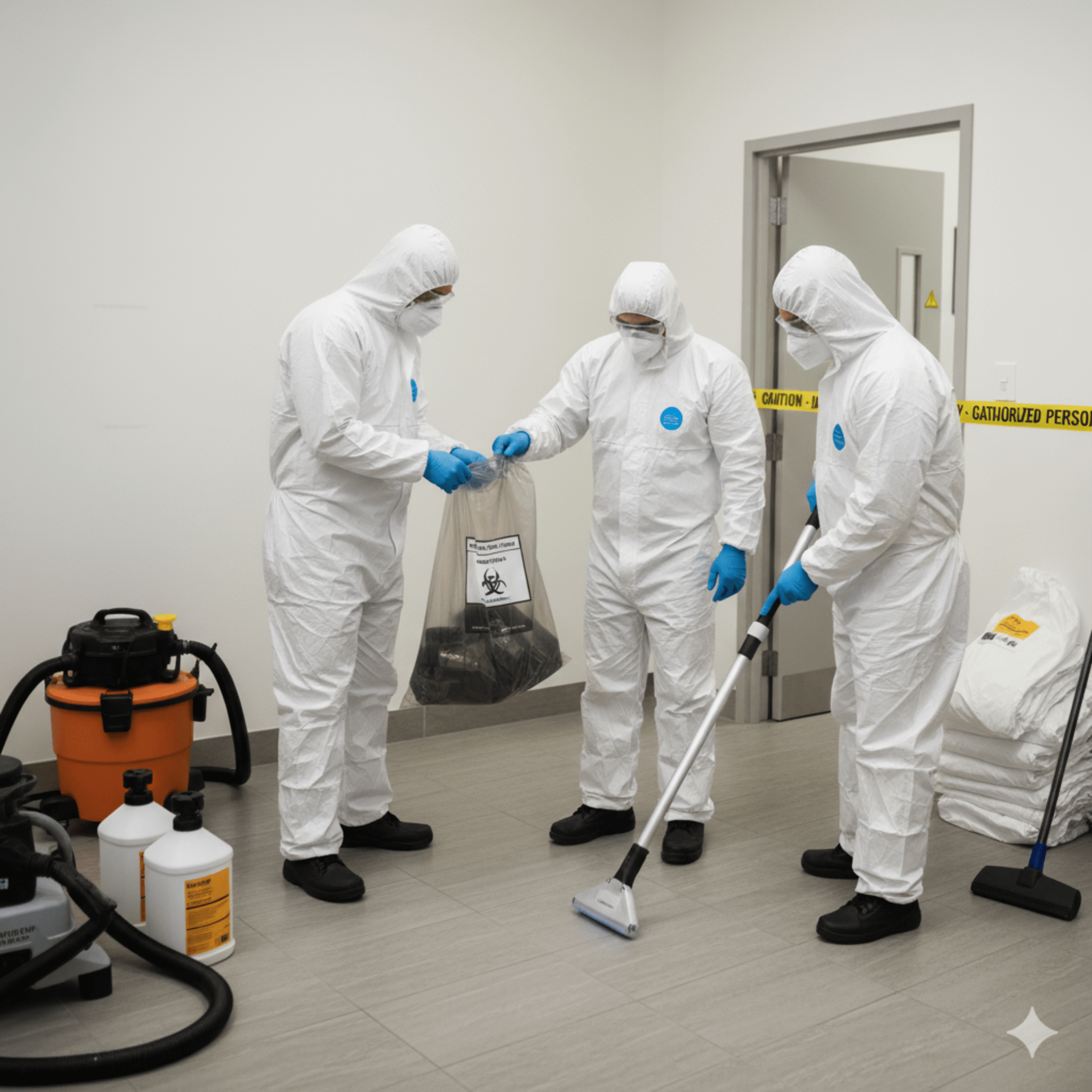
It’s tempting to grab gloves and a mop, but black water is closer to a hazardous-material spill than a flooded floor. Safe cleanup requires the right PPE, industrial extraction and air-handling equipment, hospital-grade disinfectants used with proper contact time, and compliant disposal of contaminated materials — plus the judgment to spot secondary problems like mold before they take hold. A trained, IICRC-certified team handles all of that and decontaminates the space so it’s genuinely safe to return to, not just visibly clean.
The professional cleanup process
Extraction and debris removal
We pump out the standing sewage and remove contaminated porous materials that can’t be salvaged — carpet, pad, affected drywall, and the like — handling and disposing of all of it as biohazard waste under the proper regulations.
Disinfection and sanitization
Once the water and debris are out, every affected surface is cleaned and treated with industrial-grade disinfectants, given the contact time needed to actually kill pathogens — not a quick spray. This is the step that turns a clean-looking room into a safe one.
Drying and odor elimination
We dry the structure with commercial air movers and dehumidifiers, monitoring moisture so mold can’t follow, then neutralize the lingering sewage odor at the source with air scrubbers and deodorizers. If mold has already started, our mold remediation team handles that too, and any structural water-damage restoration is sequenced in.

What sewage cleanup costs in Las Vegas
Cost depends on how far the contamination spread, how much porous material has to be removed, and the severity of the contamination. These are typical Las Vegas Valley estimate ranges for planning — not a quote. Pinpoint provides a free on-site assessment.
| Scope | Typical cost range |
|---|---|
| Small contained backup — one bathroom | ~$1,500–$4,000 |
| Moderate — multiple rooms + porous material removal | ~$4,000–$10,000 |
| Major black-water event — extensive contamination | ~$10,000–$30,000+ |
Insurance and documentation
Many homeowners policies cover sudden sewage backups, though some require a specific “sewer/water backup” endorsement — and gradual problems are usually excluded. Either way, documentation drives the claim: photograph and video the damage before cleanup begins, keep a log of what was removed and what was done, and save receipts. We document the loss thoroughly — before, during, and after — and work with your adjuster to keep the claim moving. Check your specific policy or call your agent to confirm what’s covered.
Preventing future backups
- Watch what goes down the drain. No grease, coffee grounds, “flushable” wipes, or paper towels — they’re the most common cause of clogs that back up.
- Clean drains periodically. Routine professional drain cleaning is far cheaper than a backup.
- Learn the early signs. Gurgling drains, slow drainage in multiple fixtures, or a sewage smell often precede a full backup — act on them early.
- Address aging pipes and root intrusion. Persistent damp spots in the yard or chronically slow drains can mean a cracked or root-invaded line; have it inspected before it fails.
- Know your main shut-off. Find it now, not during an emergency.
Pinpoint Field Note
Pinpoint Field Note
The instinct after a sewage backup is to start mopping — and it’s the worst thing you can do. We’ve been called to homes where a homeowner cleaned up the visible water with a household vacuum and a mop, then got sick a few days later, because black water isn’t something you neutralize with a household cleaner. Worse, running a fan or leaving the AC on pushes contaminated aerosols through the whole house and the ductwork.
The right move is boring but it works: keep everyone out, shut off the water, kill the HVAC, and let a crew in PPE handle the extraction, disinfection, and disposal. Sewage cleanup is one of the few home emergencies where doing less yourself genuinely keeps you safer.
— Pinpoint Property Services, Field Observation
Frequently asked questions
What are the main health dangers from a sewage backup?
Raw sewage carries bacteria, viruses, and parasites that can cause gastrointestinal illness, skin infections, and more serious conditions through contact or inhalation. Decomposing sewage also releases gases like methane and hydrogen sulfide that can cause headaches and dizziness. It’s why you shouldn’t handle it yourself.
How fast should I deal with a sewage backup?
Immediately. Pathogens multiply quickly, the water keeps spreading into porous materials, and mold can begin within 24 to 48 hours. The faster a trained crew extracts and decontaminates, the less damage and health risk you’re left with.
Can I clean up a sewage backup myself?
It’s strongly discouraged. Sewage is a biohazard, and safe cleanup requires proper PPE, extraction and air-handling equipment, hospital-grade disinfection, and compliant disposal. Professionals decontaminate the space rather than just removing the visible mess.
What’s the difference between gray water and black water?
Gray water comes from sinks and showers — dirty, but lower risk. Black water comes from toilets and sewage backups and is heavily contaminated with pathogens, so it requires full biohazard cleanup and disinfection.
How do professionals clean up sewage?
They extract the standing sewage, remove and dispose of contaminated porous materials as biohazard waste, disinfect every surface with industrial-grade products, dry the structure to prevent mold, and neutralize odor at the source.
Will my insurance cover sewage backup cleanup?
Often yes for a sudden backup, though some policies require a specific sewer/water-backup endorsement, and gradual issues are usually excluded. Check your policy or call your agent, and document everything before cleanup begins.
How can I prevent sewage backups?
Keep drains clear — no grease, wipes, or paper towels — have drains cleaned periodically, act on early signs like gurgling or slow drainage, and have aging or root-invaded lines inspected before they fail.
What if I see mold after a sewage backup?
Don’t clean it yourself. The same crew handling the sewage cleanup can remediate the mold, ensuring both the contamination and the moisture source are properly addressed so your home is safe again.
LOCAL. CERTIFIED. READY TO HELP.
Need Property Restoration or Cleanup in the Las Vegas Valley?
Whether it’s water damage, mold, asbestos, fire and smoke, or a biohazard situation, Pinpoint Property Services can help you understand the next step.
Contact Pinpoint Property Services Today for a Free Inspection:

