
Trauma & Unattended Death Cleanup: What Families Should Know
If you’re reading this, there’s a good chance you’ve just lived through one of the hardest days a person can face — a loss inside a home, a call from the Clark County Coroner, or a property manager telling you a unit needs “special cleaning.” First, we’re sorry. You don’t have to figure the next part out alone.
Trauma and unattended death cleanup is a specialized, regulated field — not ordinary house cleaning, and not something a grieving family should ever feel obligated to do themselves. Across Las Vegas, Henderson, and the wider Vegas Valley, our team at Pinpoint Property Services handles these situations quietly and respectfully, working around law enforcement, coroners, and property owners so families can step back and grieve.
This guide explains, in plain and non-graphic terms, what this work involves, why it’s a safety and legal matter rather than a chore, how the process protects your health and privacy, and how it’s often paid for — to take some of the fear and confusion out of a moment that already has enough of both.
Quick Facts for Families
- It’s a biohazard, not a mess. Blood and bodily fluids are treated as potentially infectious material (OPIM) under federal OSHA rules — cleanup requires training, PPE, and proper disposal.
- You are never required to clean it yourself. Neither police nor the coroner will ask a family to handle biohazard remediation.
- Standard cleaners aren’t equipped for it. Maid services and general contractors typically aren’t trained, insured, or permitted for bloodborne-pathogen work.
- Insurance often helps. Many homeowners and property policies cover biohazard cleanup — we’ll help you find out before any work begins.
- Golden rule: Don’t enter, touch, or attempt to clean an affected area. Close the door, keep others (and pets) out, and call a certified team.
On This Page
- What biohazard and trauma cleanup actually involves
- Why it’s not a job for family or a standard cleaning crew
- Unattended death: why time changes everything
- The compassionate, discreet process — step by step
- Coordinating with the coroner, police, and property managers
- Does homeowners insurance cover it?
- What trauma cleanup costs in Las Vegas
- What to expect when you call
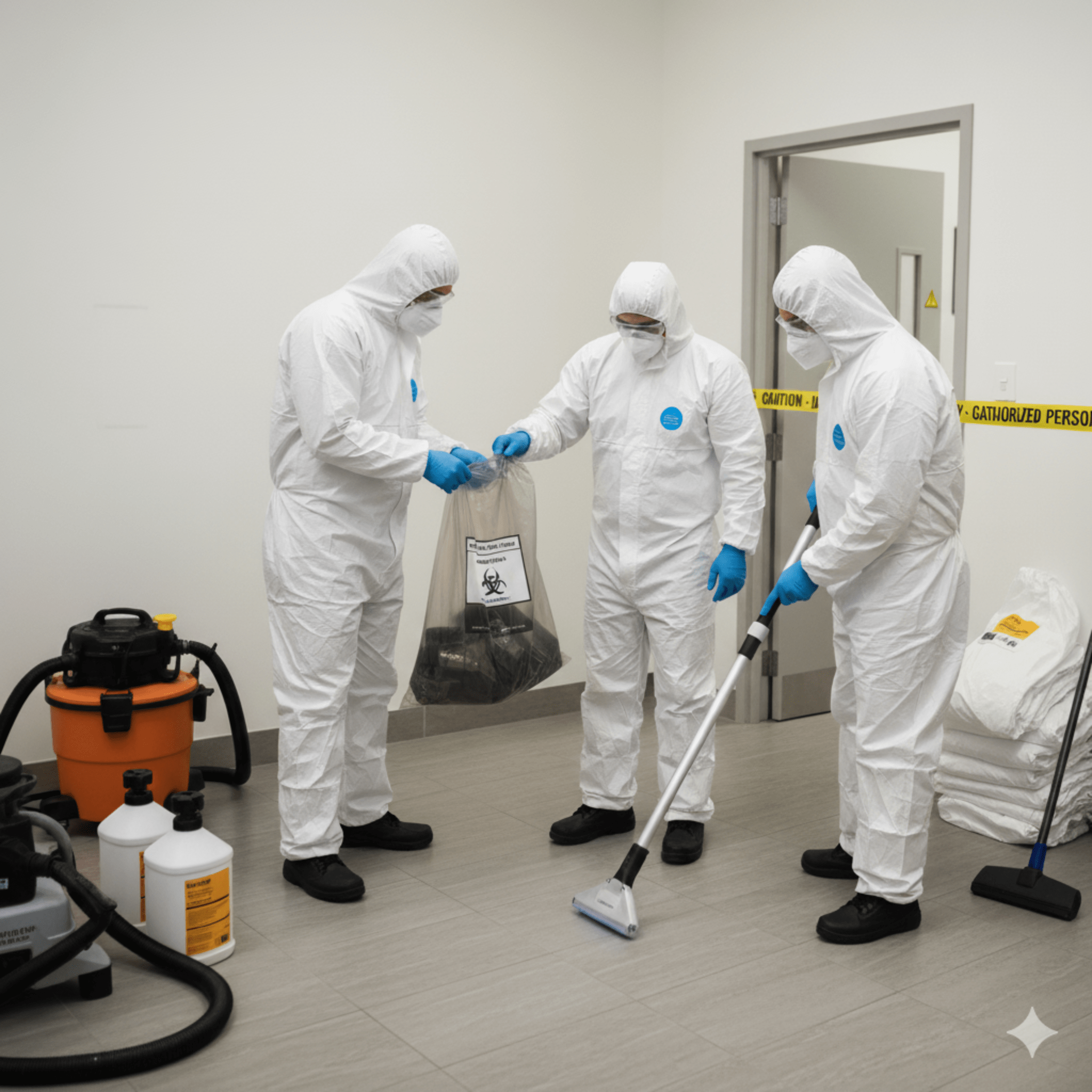
What biohazard and trauma cleanup actually involves
Biohazard and trauma cleanup — sometimes called crime scene cleanup or bioremediation — is the professional decontamination of a space affected by blood, bodily fluids, or other potentially infectious materials. In the Vegas Valley, the situations we’re most often called to include accidents, suicides, homicides, unattended deaths, and serious medical events at home.
The work goes far beyond what’s visible on a surface. Blood and other bodily fluids are classified as OPIM — Other Potentially Infectious Materials — because they can carry bloodborne pathogens such as hepatitis B, hepatitis C, and HIV. Proper remediation means removing all contamination, disinfecting the area to a verifiable standard, and safely disposing of anything that can’t be fully decontaminated.
Fluids also travel — they seep into flooring, wick under baseboards, and penetrate subfloor and drywall, which is why “cleaning the surface” isn’t the same as making a space safe. Much of trained trauma work is identifying how far contamination has spread and removing porous materials that can’t be certified clean rather than simply wiped down. When decomposition is involved, the air itself has to be treated, not just the room.
Why it’s not a job for family or a standard cleaning crew
There are two reasons this work belongs with a certified team, and both matter: your safety and your well-being.
The health and legal side. Because blood and fluids are treated as infectious, the federal OSHA Bloodborne Pathogens Standard (29 CFR 1910.1030) governs how this material is handled, contained, and disposed of. Certified technicians work in full personal protective equipment, use hospital-grade disinfectants, follow documented decontamination protocols, and dispose of biohazard waste through licensed medical-waste channels — not a household trash bin. A well-meaning family member or a general cleaning crew usually has none of that training, equipment, insurance, or disposal access, and the wrong cleaning product can actually set stains and odors permanently or spread contamination further.
The human side. Even setting the regulations aside, no one should have to clean up after the loss of someone they love. The memory of it can stay with a person for years. Bringing in a specialist isn’t a luxury — it’s a way to protect yourself, and our role is to quietly take that burden off your shoulders so your family can focus on each other.
Serious contamination can also compromise a home’s structure. If fluids have reached subfloor or wall cavities, the affected materials may need controlled removal and rebuilding — the same disciplined approach we bring to water damage restoration, where hidden moisture causes more damage than what’s visible. Address what you can’t see, or the problem doesn’t truly go away.
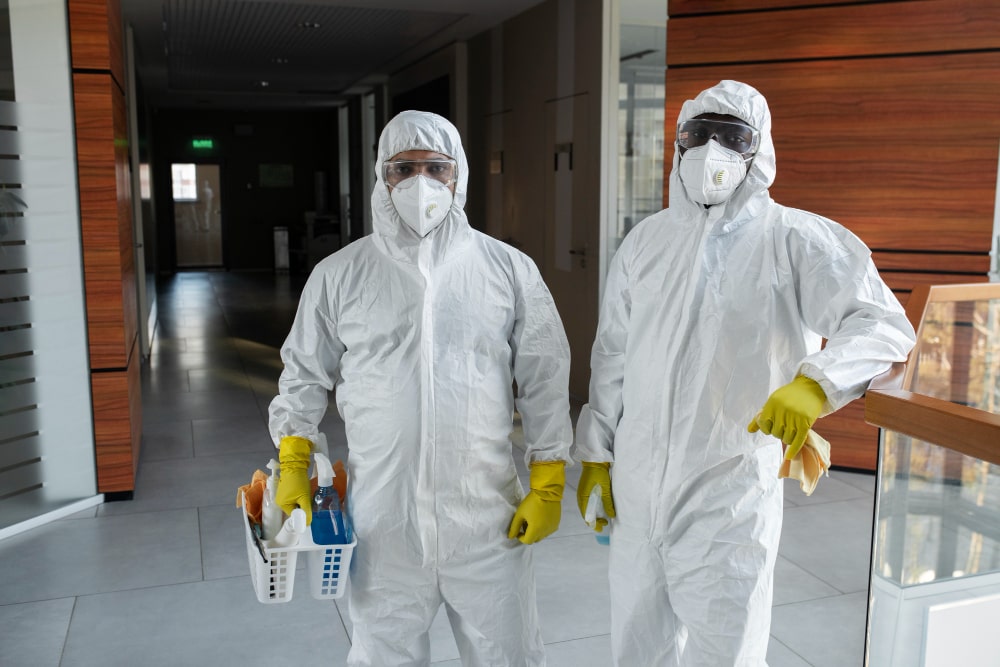
Unattended death: why time changes everything
An unattended death is one where a person passes away and isn’t discovered for some time — hours, days, or occasionally longer. In the Las Vegas heat, especially indoors during summer, the natural process of decomposition begins quickly, and that changes what remediation requires.
We’ll keep this gentle and non-graphic, because you don’t need the details to make a good decision. What matters is this: decomposition releases fluids and strong, persistent odors that penetrate deeply into flooring, subfloor, drywall, and a home’s HVAC and air. Odor bonds to materials and circulates through the ventilation system, which is why household air fresheners and open windows never resolve it.
Effective work here means removing the porous materials that absorbed contamination, decontaminating the structure underneath, and treating the air itself — often with HEPA air scrubbers, hydroxyl or ozone treatment, and enzyme-based odor neutralization. Done properly, a space is fully restored to a safe, neutral, livable condition. The difference between a room that “smells cleaner” and one that is genuinely decontaminated comes down to whether the source was removed or merely masked.
The compassionate, discreet process — step by step
Families often tell us the not-knowing is the hardest part. Here’s what the process generally looks like, so there are no surprises:
- Discreet arrival. We arrive in unmarked or low-profile vehicles when requested. Your neighbors don’t need to know why we’re there.
- Assessment and scope. A technician quietly evaluates the area, identifies how far contamination has traveled, and explains the plan in clear terms — no jargon, no pressure.
- Containment. We isolate the affected area with barriers and controlled airflow to prevent cross-contamination to the rest of the home.
- Remediation and removal. Contaminated porous materials are removed and packaged as biohazard waste; salvageable surfaces are cleaned and disinfected to standard.
- Decontamination and verification. The area is treated with hospital-grade disinfectants and checked to a safe, verifiable standard — not just a visual one.
- Odor and air treatment. Where needed, we treat the air and HVAC pathways to remove odor at the source rather than masking it.
- Restoration. Once decontaminated, we can rebuild what was removed — flooring, drywall, paint — so the home is returned to normal, not left as a reminder.
- Documentation. You receive a record of the work performed, which supports insurance claims and, for rentals or estates, gives property owners the documentation they need.
Throughout, our team keeps the same calm, warm manner we bring to every emergency — because on this kind of day, how you’re treated matters as much as the work itself.
Coordinating with the coroner, police, and property managers
One thing that surprises many families: cleanup only begins after the authorities have finished. In Clark County, law enforcement and the Coroner’s Office control the scene until any investigation is complete and the person has been respectfully removed. Nothing should be cleaned or disturbed until they release the property — and they will never ask the family to do the cleaning.
Once the scene is released, a biohazard team steps in. We’re experienced at working within this sequence and coordinate directly with everyone involved so you don’t have to be the go-between:
- With families and next of kin — we take direction from you, at your pace, and keep communication simple during an overwhelming time.
- With property managers and landlords — for deaths or incidents in rental units across Las Vegas and Henderson, we handle remediation and provide documentation so a unit can be safely and lawfully returned to service. This is the same reliable coordination property managers rely on us for across our biohazard and trauma cleanup work.
- With insurance carriers — we document the scope of work in the format adjusters need, and can bill directly where coverage applies.
Does homeowners insurance cover it?
Often, yes — and this is a relief to many families who assume they’ll be paying entirely out of pocket. Many homeowners, renters, and commercial property policies include coverage for biohazard cleanup and trauma remediation, sometimes under a specific provision. Some policies in Nevada and elsewhere also reference victim-assistance or crime-related cleanup benefits.
Coverage always depends on your specific policy and the circumstances, so nothing is guaranteed until it’s confirmed. What we can do is take that homework off your plate: we’ll help you understand what’s likely covered, document the work to the standard carriers expect, and bill the insurer directly where possible — so in many cases your out-of-pocket cost is limited to your deductible. This is the same claims-handling discipline we bring to fire damage cleanup and water restoration, where careful documentation is what gets a claim approved rather than disputed.
If there’s no applicable coverage, we’ll give you a clear written estimate before any work begins. You’ll always know where you stand first. Have questions about your situation? You can contact us anytime — there’s no cost or obligation to ask.
What trauma cleanup costs in Las Vegas
Cost is one of the first practical questions families ask, and it’s a fair one. Because every situation is different — the size of the affected area, how far contamination traveled, whether odor and decomposition are involved, and how much rebuilding is needed — there’s no single flat price. The planning ranges below reflect typical trauma scene cleanup scenarios in the Las Vegas Valley to help you set expectations.
| Scenario | Typical scope | Planning range |
|---|---|---|
| Small, contained area | Limited affected surface, no structural removal | $1,500 – $3,500 |
| Moderate contamination | Flooring/subfloor removal, some drywall, disinfection | $3,500 – $7,500 |
| Unattended death w/ odor | Decomposition cleanup, air & HVAC odor treatment | $5,000 – $10,000+ |
| Extensive / multi-room | Wide contamination, structural rebuild required | $10,000 – $25,000+ |
These are planning ranges to help you prepare, not a quote. Actual pricing depends on the specific property and scope, and in many cases insurance covers most or all of the cost. We provide a clear written estimate after assessing the situation — and if it’s an insured claim, we bill the carrier directly.
From the Field: A property manager once called us about a Henderson unit, worried that a “deep clean” hadn’t fixed a lingering odor weeks after an unattended death — the previous crew had cleaned the visible area but left the subfloor and HVAC untouched. When odor keeps coming back, it’s almost always because the source was masked, not removed. We took up the affected flooring, decontaminated the structure underneath, treated the air pathways, and the unit returned to service safely. It’s the clearest reminder we know that this work is about what you can’t see.
What to expect when you call
Reaching out is often the hardest step, so we try to make it the easiest. When you call Pinpoint Property Services, you’ll speak with a real local person, not a national call center. We’ll listen first, answer your questions, and explain the next steps calmly — including whether the authorities still need to release the property.
From there, we respond quickly across Las Vegas, Henderson, and the Vegas Valley, arrive discreetly, and handle everything from assessment through decontamination and rebuild — helping you with insurance and documentation and protecting your privacy at every step. You set the pace; we carry the load.
Pinpoint Property Services is IICRC-certified, fully licensed (Nevada License #0084981), insured, and locally owned — and we approach this work the way we’d want someone to treat our own family. That’s what “Precise Solutions. Clean Results.” means on the days that matter most.
Frequently asked questions
Are family members ever required to clean up after a death or trauma?
No. Neither law enforcement nor the Clark County Coroner will ask a family to clean a scene. Because blood and bodily fluids are treated as potentially infectious material under OSHA rules, this work is meant for trained, certified professionals. You’re free to step back and let a biohazard team handle it.
Why can’t a regular cleaning company or handyman do this?
Standard cleaning crews and general contractors typically aren’t trained in the OSHA Bloodborne Pathogens Standard, don’t carry the right protective equipment or insurance, and don’t have access to licensed medical-waste disposal. The wrong products can also set stains and odors permanently or spread contamination. Certified trauma remediation follows documented protocols to make a space verifiably safe, not just visually clean.
Does homeowners insurance cover biohazard and trauma cleanup?
Often, yes. Many homeowners, renters, and commercial property policies include coverage for biohazard cleanup, and some also reference victim-assistance benefits. Coverage depends on your specific policy and circumstances. Pinpoint will help you confirm what’s covered, document the work to carrier standards, and bill your insurer directly where possible — so your cost is frequently limited to your deductible.
How soon can cleanup begin after an unattended death?
Cleanup can begin only after law enforcement and the coroner have completed their work and released the property. Once the scene is released, it’s best to start remediation promptly — in the Las Vegas heat, decomposition and odor penetrate materials quickly, so faster action generally means a simpler, less costly restoration.
Can you remove odor from an unattended death, or does it stay forever?
Odor can be fully removed when the source is addressed, not masked. That usually means removing porous materials that absorbed contamination, decontaminating the structure underneath, and treating the air and HVAC pathways with equipment like HEPA scrubbers and hydroxyl or enzyme-based treatment. Air fresheners and cleaning alone won’t resolve it because the odor is bonded deep in the materials.
Will neighbors know what happened?
We treat your privacy as part of the job. Pinpoint can arrive in low-profile or unmarked vehicles on request and works discreetly, so there’s no need for neighbors to know why we’re there. Protecting your family’s dignity and privacy is a core part of how we handle this work.
LOCAL. CERTIFIED. READY TO HELP.
Need Property Restoration or Cleanup in the Las Vegas Valley?
Whether it’s water damage, mold, asbestos, fire and smoke, or a biohazard situation, Pinpoint Property Services can help you understand the next step.
Contact Pinpoint Property Services Today for a Free Inspection:

