
What Is the 3-5-7 Rule for Asbestos Sampling? (And Why It Matters)
If you’re renovating an older home in the Vegas Valley, or a contractor has flagged “popcorn” ceilings or a suspect wall texture, you’ll eventually run into a phrase that sounds more like a football play than a safety standard: the 3-5-7 rule. It comes up the moment an inspector starts talking about how many samples they need to pull before anyone can say whether a material contains asbestos.
The short version: the 3-5-7 rule tells an accredited inspector how many physical samples to collect from a single type of surface — three, five, or seven — based on how much of that surface there is. It exists because you cannot judge asbestos by eye, and one lucky (or unlucky) sample from a big ceiling doesn’t tell the whole story. It comes straight out of the federal AHERA protocol, and it’s the reason a proper asbestos survey on a large Las Vegas ceiling isn’t a single scrape in a baggie.
This guide breaks the rule down in plain English: what the three tiers mean, the “homogeneous material” idea it hinges on, why representative sampling protects you, who’s allowed to take those samples (an independent lab, never the company that removes the material), and how the results decide the shape of any abatement that follows.
- What it is: a federal AHERA sampling protocol for how many samples to collect from a single surfacing material before it can be called clean or positive.
- The three tiers: 3 samples for up to 1,000 sq ft · 5 samples for 1,000–5,000 sq ft · 7 samples for over 5,000 sq ft of the same material.
- What “surfacing material” means: sprayed-on or troweled-on finishes like popcorn ceilings, acoustic texture, and decorative wall coatings.
- Why the numbers climb: asbestos isn’t mixed evenly, so bigger areas need more sample points to be truly representative.
- The golden rule: one sample is never enough for a large surface — if a positive result changes your whole scope, the sample count has to match the area.
- Who does what: an independent accredited inspector collects the samples and a certified lab analyzes them; a licensed abatement crew removes, air-monitors, and clears. Those are separate roles for a reason.
- What the 3-5-7 rule actually says
- The idea it hinges on: “homogeneous material”
- Why it’s specific to surfacing materials
- Why representative sampling matters so much
- Who takes the samples — and why it’s never us
- How the results drive the abatement scope
- What a Las Vegas homeowner should expect
- What sampling and abatement cost in Las Vegas
- Frequently asked questions
What the 3-5-7 rule actually says
The 3-5-7 rule is the minimum number of bulk samples an inspector must collect from a single surfacing material, scaled to the size of the area. It comes from the AHERA regulations — the Asbestos Hazard Emergency Response Act — which set the sampling standard that inspectors across the country, including here in Clark County, follow as accepted practice. The tiers are simple to remember:
- 3 samples for a surface up to 1,000 square feet.
- 5 samples for a surface between 1,000 and 5,000 square feet.
- 7 samples for a surface over 5,000 square feet.
So if your inspector is sampling the textured ceiling across a 1,400-square-foot single-story Vegas home and it’s all the same material, that’s a five-sample job — not one, and not a dozen. The count isn’t arbitrary; it’s the number statisticians and regulators landed on to give a reliable read on whether asbestos is present anywhere in that material, not just at the one spot the inspector happened to reach first.
One important nuance: these are minimums. An inspector can and often does take more if a material spans several rooms, looks patched, or was clearly applied at different times. The rule sets the floor for a defensible survey, not the ceiling.
The idea it hinges on: “homogeneous material”
The whole rule falls apart if you don’t understand one term: homogeneous material. In asbestos surveying, a homogeneous area is a single material that’s uniform in color, texture, and date of application — meaning it was all installed as one batch, one job, one product. The popcorn ceiling sprayed throughout a 1972 tract home is (usually) one homogeneous material. The ceiling in an addition built in 1995 is a different homogeneous material, even if it looks similar.
This matters because the 3-5-7 count applies per homogeneous material, not per house. A home with an original textured ceiling, a different wall texture in the hallway, and a re-sprayed ceiling in a remodeled bedroom has three separate homogeneous areas — and each one gets its own 3, 5, or 7 samples based on its own square footage. That’s why a thorough survey of an older, added-onto Vegas home can involve more sampling than people expect. The inspector isn’t padding the bill; they’re treating each distinct material as its own question.
Why it’s specific to surfacing materials
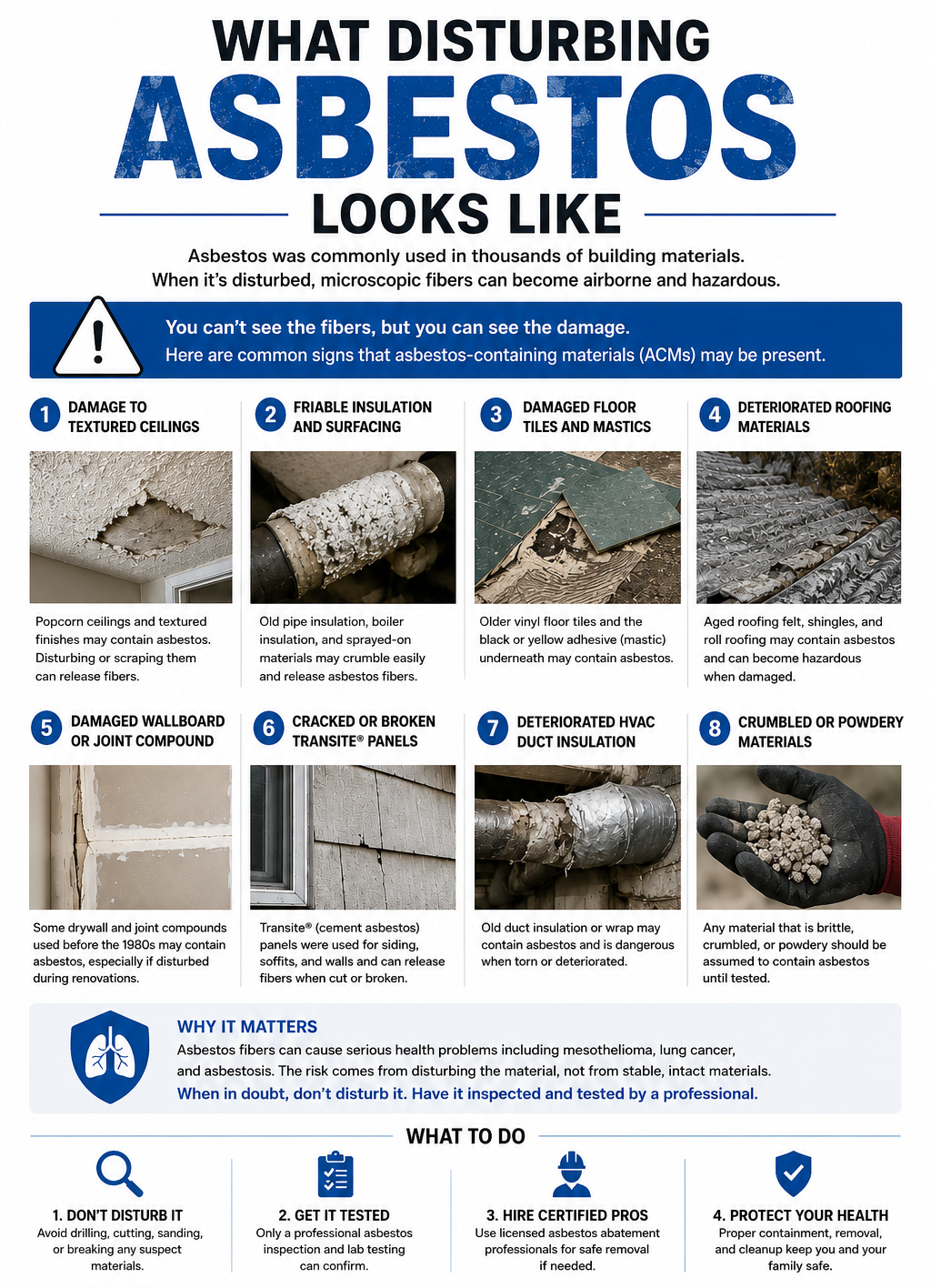
The 3-5-7 tiers apply to one category in particular: surfacing materials. Under AHERA, that’s anything sprayed-on, troweled-on, or otherwise applied to a surface for decoration, acoustics, or fireproofing. In Vegas homes, the classic example is the popcorn or “cottage cheese” ceiling texture found in so many pre-1990 builds, along with skip-trowel wall texture and some decorative plasters.
Other material categories follow different sampling logic. Thermal system insulation — the wrap on old pipes, ducts, and boilers — is generally sampled at a minimum of three points per homogeneous area regardless of size. Miscellaneous materials like floor tile, mastic, and roofing are sampled in the number needed to reasonably represent them. So when someone quotes you the 3-5-7 rule, they’re specifically talking about that sprayed or troweled surface finish — which, conveniently, is exactly the material most Las Vegas homeowners are worried about when they hear “popcorn ceiling.”

Why representative sampling matters so much
Here’s the reason the rule exists at all: asbestos was never mixed into these materials evenly. When a crew in the 1970s sprayed acoustic texture across a ceiling, the asbestos content could vary batch to batch, bucket to bucket, corner to corner. A single sample from the middle of the room might come back clean while a sample from ten feet away comes back positive — same ceiling, different answer.
That’s what “representative” means: enough sample points, spread across the area, that a positive material can’t hide in the gaps. If an inspector pulled one sample from a 3,000-square-foot ceiling and it read negative, you’d have no honest way to know the other 2,999 square feet were clean. The 3-5-7 tiers scale the sampling so confidence scales with the area — and it cuts both ways, since thorough sampling can just as easily clear a material and save you an unnecessary removal. Representative sampling protects your wallet as much as your lungs.
The practical takeaway: be wary of anyone who wants to take a single scrape off a big ceiling and call the whole thing safe. A proper survey follows the count, documents where each sample came from, and gives you a result you can stand behind — in a renovation, a home sale, or an insurance file.
Who takes the samples — and why it’s never us
This is the part people are most surprised by: Pinpoint does not test or sample asbestos. Sampling is collected by an independent, accredited asbestos inspector, and the bulk samples are analyzed by a certified third-party laboratory. We’re the licensed crew that removes confirmed asbestos, monitors the air during the work, and secures clearance — a deliberately separate role.
That separation isn’t a technicality; it’s what keeps the result honest. When the company that samples and confirms a hazard is different from the company paid to remove it, there’s no built-in incentive to “find” asbestos that isn’t there. An accredited inspector applies the 3-5-7 rule, collects the samples, maintains the chain of custody, and sends everything to a lab that reports what’s actually in the material. Only then, if results come back positive, does an abatement contractor like us step in with a scope built on those documented findings.
So if you call us first about a suspect ceiling, our answer will be to get you a proper independent survey before anyone talks about removal. It’s the right sequence, it’s what Clark County and Nevada generally expect before demolition or major renovation on older buildings, and it means the abatement — if it’s even needed — rests on a clean, defensible paper trail. You can see the standards we hold to on our asbestos removal page.
How the results drive the abatement scope
Once the lab reports come back, the numbers on those results shape everything about the work that follows. This is where the 3-5-7 rule pays off — because sampling was done per homogeneous material, the results tell us exactly which materials are positive and which are clean, so the abatement is scoped to reality instead of guesswork.
- All negative? No abatement needed. Your renovation or HVAC work proceeds, and you have documentation proving the material was cleared.
- One material positive, others clean? We contain and remove only the positive homogeneous area — say, the original living-room ceiling — and leave the clean 1995 addition alone. Precise sampling keeps the removal (and the cost) from ballooning.
- Multiple materials positive? We sequence the work, containing and abating each area under negative air, so the whole project stays controlled.
Under EPA NESHAP standards, our crew isolates the positive area with sealed sheeting and HEPA-filtered negative-air machines, wet-removes the material, conducts air monitoring during the abatement to confirm the controls are holding, then HEPA-cleans and runs final clearance air sampling before the space is released. The clearance documentation is formatted for insurance carriers, real estate transactions, and regulatory records. If the same project turns up water intrusion or mold remediation needs in the same ceiling cavity, we can coordinate that too.
What a Las Vegas homeowner should expect
Put together, here’s the realistic sequence for a Vegas Valley homeowner who’s just learned their older ceiling might contain asbestos:
- Pause the work. If a contractor is about to scrape, sand, or cut a suspect ceiling or texture, stop. Disturbing it before it’s cleared is what creates a hazard.
- Bring in an independent inspector. An accredited inspector identifies each homogeneous material, applies the 3-5-7 rule, and collects the right number of samples from each.
- Wait for the lab. A certified lab analyzes the bulk samples — usually a couple of business days — and issues a written report per material.
- Review the scope. If anything is positive, we build an abatement scope directly from those results, so you’re only paying to remove what’s actually there.
- Abatement, air monitoring, and clearance. Our licensed crew contains, removes, monitors the air, and passes final clearance under NESHAP standards.
- Get your paperwork. You leave with clearance documentation for your renovation permit, home sale, or insurance file.
Because a survey like this isn’t an emergency, it’s usually scheduled a few days out — which is exactly why doing it before you book demolition or an HVAC swap saves so much stress. If you’re mapping out a project in an older home, reach out to our team and we’ll help you line up the survey and, if it’s needed, the abatement in the right order.
What sampling and abatement cost in Las Vegas
Two separate costs sit behind a 3-5-7 survey: the independent inspection and lab work, and the abatement itself if a material comes back positive. The sampling cost tends to scale with how many homogeneous materials and sample points are involved — which is the rule in action. These are typical planning ranges for the Vegas Valley:
| Scope of work | Typical Las Vegas range |
|---|---|
| Independent survey & bulk sampling — small home, few materials | $350 – $700 |
| Larger survey — multiple homogeneous areas (5–7 samples each) | $700 – $1,500 |
| Popcorn / texture ceiling abatement — single room | $1,500 – $4,000 |
| Whole-home textured ceiling abatement | $3,000 – $9,000+ |
| Air monitoring during abatement + final clearance sampling | $500 – $1,200 |
These are planning ranges to help you budget, not a quote. Actual pricing depends on the number of homogeneous materials, square footage, access, containment complexity, and disposal requirements, and is set after the survey results and an on-site assessment.
The biggest variables are how many distinct materials need sampling (each is its own 3-5-7 count), the total area to abate, and access. Getting the survey done first is what lets us scope precisely — and it’s why representative sampling so often lowers the final bill, by clearing materials that never needed touching and pinning the removal to only what’s positive.
“From the field: We get calls from homeowners who had one sample taken off a big ceiling by a handyman, got a ‘negative,’ and started scraping — then panicked halfway through wondering if that one sample really covered the whole room. It usually didn’t. When an accredited inspector runs the 3-5-7 count properly, we’ve seen a ceiling come back clean on four samples and positive on the fifth. That fifth sample is the entire point. It’s the difference between a controlled abatement and a family unknowingly living in disturbed material. We’d always rather scope from a full, honest survey than clean up after a shortcut.”
Frequently asked questions
What exactly is the 3-5-7 rule for asbestos sampling?
It’s the AHERA protocol for how many bulk samples to collect from a single surfacing material based on its size: 3 samples for up to 1,000 square feet, 5 samples for 1,000 to 5,000 square feet, and 7 samples for anything over 5,000 square feet. The counts scale up so the sampling stays representative across larger areas.
Why not just take one sample to save money?
Because asbestos was never mixed evenly into these materials. One sample from a large ceiling can read clean while another spot reads positive. Taking too few samples means a hazardous material could hide in the untested area — which is exactly what the 3-5-7 tiers are designed to prevent. Proper sampling can also clear a material and save you an unnecessary removal.
Does the 3-5-7 rule apply to floor tile or pipe insulation?
No. The 3-5-7 tiers are specific to surfacing materials — sprayed or troweled finishes like popcorn ceilings and wall texture. Thermal system insulation, such as old pipe and duct wrap, is generally sampled at a minimum of three points per homogeneous area, and miscellaneous materials like floor tile are sampled in the number needed to represent them.
Does Pinpoint collect the samples?
No. Sampling is done by an independent, accredited inspector, and the samples are analyzed by a certified third-party lab, so the result has no conflict of interest. Pinpoint is the licensed crew that removes confirmed asbestos, performs air monitoring during the abatement, and secures final clearance under EPA NESHAP standards.
How do the sample results affect what gets removed?
Because sampling is done per homogeneous material, the lab results tell us precisely which materials are positive and which are clean. We contain and abate only the positive areas and leave clean materials alone, which keeps the scope and the cost tied to reality instead of a worst-case guess.
How long does the whole process take in Las Vegas?
The survey itself is usually a single visit, with lab results back in a couple of business days. If abatement is needed, a single-room textured ceiling is often a one- to two-day job plus time for final clearance sampling. Because it isn’t an emergency, we schedule it a few days out — which is why it’s best done before you book demolition or an HVAC upgrade.
LOCAL. CERTIFIED. READY TO HELP.
Need Property Restoration or Cleanup in the Las Vegas Valley?
Whether it’s water damage, mold, asbestos, fire and smoke, or a biohazard situation, Pinpoint Property Services can help you understand the next step.
Contact Pinpoint Property Services Today for a Free Inspection:

