
Commercial Kitchen Fire: 6 Essential Steps in Las Vegas
A commercial kitchen fire can disrupt far more than the area where flames were visible. Heat, smoke, grease residue, fire-suppression discharge, and water used during firefighting can affect cooking equipment, ventilation areas, ceilings, walls, storage, dining spaces, and contents throughout a restaurant.
For Las Vegas restaurant owners and property managers, recovery involves more than cleaning the cookline. Food disposition, suppression-system service, equipment repairs and health-district approval each need an owner. This guide covers six parts of commercial kitchen fire recovery, from the first calls through the documentation needed for reopening.
Quick Facts
- Golden rule: follow emergency responders’ access restrictions and keep people out of affected areas until entry is authorized.
- Notify the Southern Nevada Health District about the incident and follow its instructions on stopping operations and reopening.
- Smoke and residue can travel beyond the room where the fire started, including through ventilation pathways, ceiling spaces, wall cavities, and open doorways.
- Firefighting water and suppression residue may create a separate water-damage problem that requires documentation, extraction, and drying.
- Keep food decisions separate from equipment-cleaning decisions. Food exposed to smoke or firefighting chemicals must not be treated as something to wash and reuse.
- Pinpoint handles the cleanup scope and contents work. Coordinate equipment, utilities and suppression-system work with the appropriate specialists.
1. First steps after a commercial kitchen fire
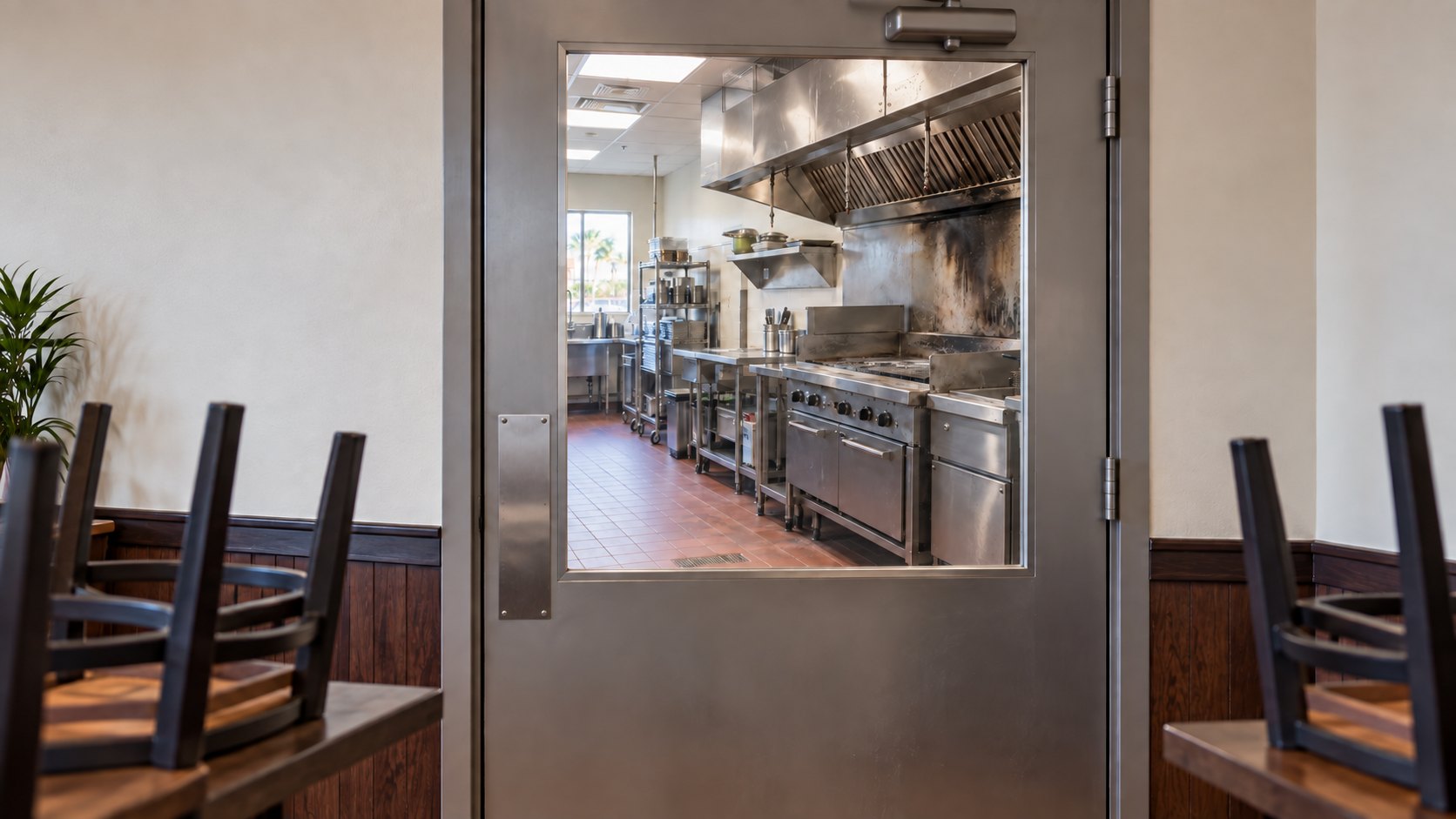
Safety comes before cleanup. If the fire department or property representative has restricted access, follow those instructions. Do not enter areas with visible structural damage, active utilities concerns, heavy smoke, standing water near equipment, or other hazards simply to retrieve belongings.
After emergency responders have addressed the immediate emergency, notify your landlord or property manager, insurer and suppression-system service provider. Also notify the Southern Nevada Health District (SNHD). Its guidance calls for notifying the district and discontinuing operations when an imminent health hazard occurs; ask the district for directions specific to your establishment. Preserve the fire department report and documents provided at the scene.
Before damaged items are moved, document conditions when it is safe to do so:
- Photograph or record the affected kitchen, storage areas, dining areas, ceilings, walls, and floors.
- Note where smoke, soot, water, or suppression residue is visible.
- Record equipment, inventory, furniture, and contents that appear affected.
- Keep damaged components and packaging available for inspection when practical.
- Save receipts, invoices, inventory records, maintenance records, and recent photographs.
Do not operate affected appliances or begin improvised soot or suppression-agent cleanup. Document damage from a safe location. For food that must be discarded, use photos and inventory records when safe; documentation must not delay necessary safe disposal or conflict with health-district instructions.
This guide covers commercial kitchens and restaurant operations. If the fire was in a home kitchen, the priorities and the path back to normal use are different — see our guide to kitchen fire cleanup in Las Vegas instead.
2. Identify smoke, water and suppression residue
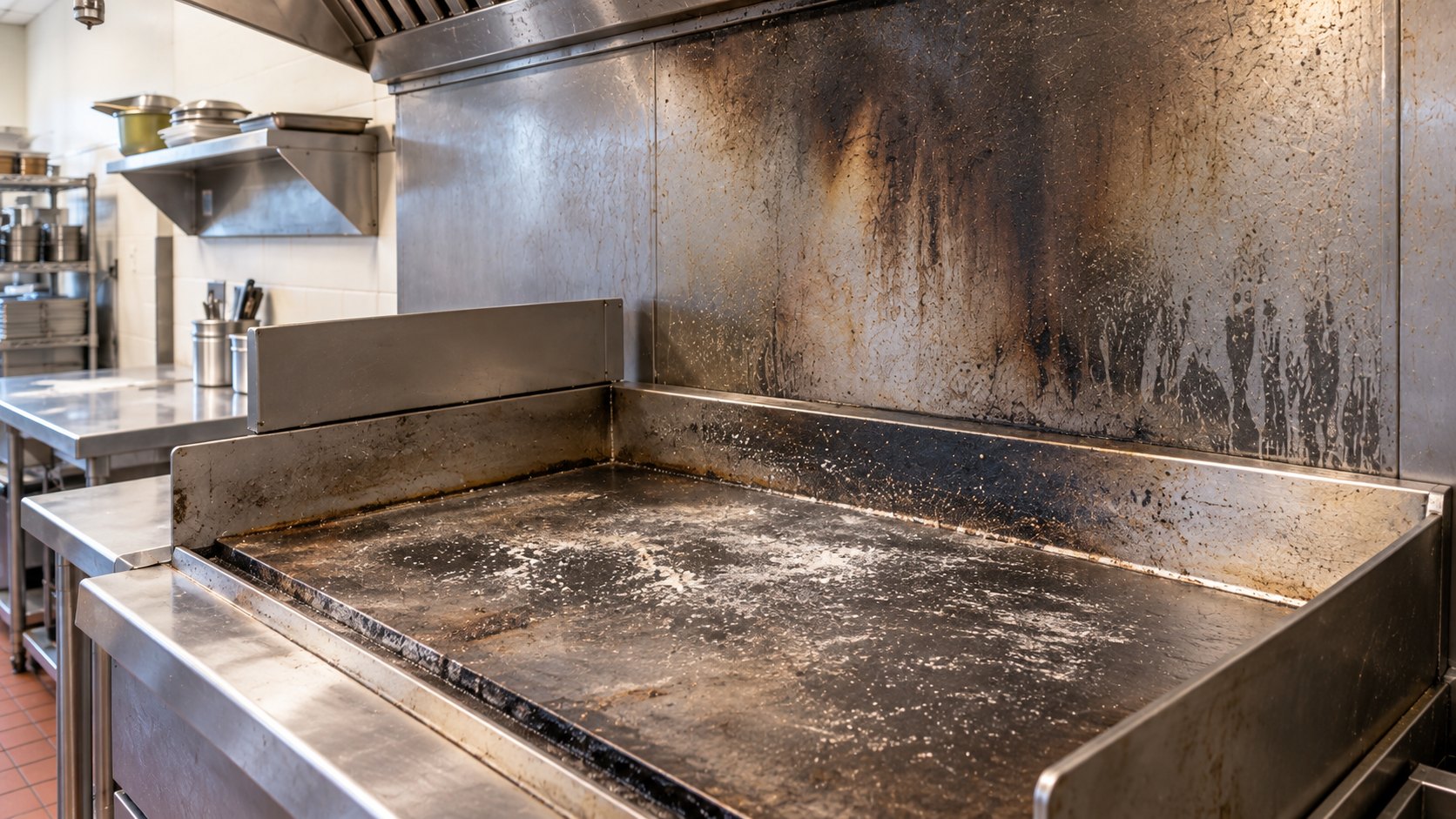
The visible burn area is only one part of a commercial kitchen fire. Heat can damage finishes, wiring components, insulation, cabinetry, refrigeration seals, and other materials without leaving extensive charring. Smoke can migrate through gaps around doors, ceiling penetrations, ductwork, and ventilation systems.
Smoke residue also behaves differently depending on what burned. Grease, plastics, packaging, wood, and building materials can leave different residues on stainless steel, painted walls, unfinished surfaces, fabrics, and porous contents. A surface that looks lightly discolored may still require careful cleaning or replacement because residue can continue to affect odor and appearance.
Record which suppression system or extinguisher discharged, rather than assuming every residue is the same. For example, ANSUL describes its R-102 wet-chemical agent as designed for grease and oil fires. This makes the agent and system identification useful information for the cleanup team and servicing technician. Follow the applicable manufacturer instructions; do not assume a universal cleaner or a fixed damage deadline.
Water, suppression discharge and fire effects may involve:
- Cooking equipment and exhaust components
- Electrical panels, outlets, controls, and wiring areas
- Refrigeration and food-storage systems
- Ceilings, insulation, drywall, flooring, and wall assemblies
- Cabinets, shelving, seating, menus, uniforms, and paper records
- Food, ingredients, packaging, and disposable service items
- HVAC and ventilation pathways
Water may reach below flooring, wall bases or behind equipment. A dry-looking surface is not a substitute for evaluating affected materials. When firefighting water is involved, include water damage restoration in the scope discussion and ask how drying progress will be documented.
3. Assign responsibilities for commercial kitchen fire recovery
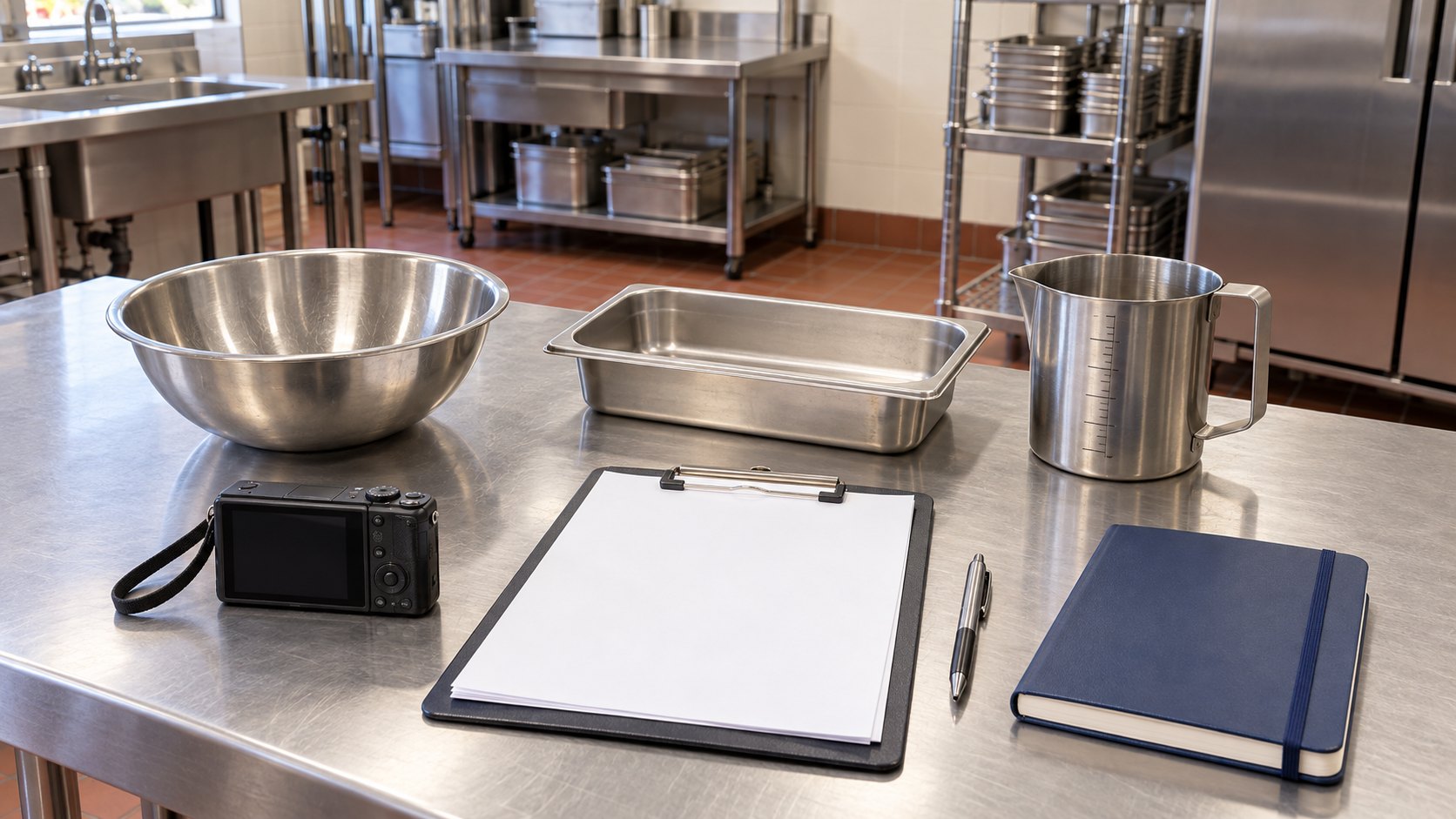
A successful recovery depends on defining responsibilities early. Restoration cleanup is important, but it does not replace the specialists who inspect, repair, service, or authorize other parts of the operation.
Pinpoint Property Services: We offer free, no-pressure on-site inspections and estimates for restoration work. Our team documents conditions and develops a cleanup scope covering fire and smoke damage, contents handling and water removal or drying when needed. This restoration inspection is not environmental sampling or lab analysis.
Independent testing professionals: Pinpoint does not perform testing. If environmental sampling, laboratory work or clearance testing is needed, use a qualified independent provider. We can help connect you with an inspector and discuss removal or remediation if the findings call for that work.
Licensed trade contractors: Qualified electricians, plumbers, HVAC and refrigeration technicians evaluate and repair the relevant systems. Urgent stabilization may need to happen before cleanup can proceed; sequencing depends on conditions and safe access.
Fire-suppression and equipment specialists: The hood, suppression system, cooking appliances and gas connections need attention from the appropriate qualified providers. Ask the servicing company what records and checks are needed before the system or equipment returns to use.
Food and inventory professionals: Follow SNHD instructions on food and inventory disposition. USDA fire and food safety guidance advises discarding food exposed to smoke fumes or firefighting chemicals. Food disposition and equipment restoration are separate decisions. Record discarded stock safely rather than preserving unsafe food solely for an insurance inspection.
Authorities and responsible decision-makers: SNHD addresses health-district permission to resume food operations. Fire and building authorities may also have requirements applicable to the loss. Landlords and insurers have separate responsibilities; an insurer’s payment decision or a landlord’s consent does not replace required regulatory approval.
4. Plan and carry out the cleanup
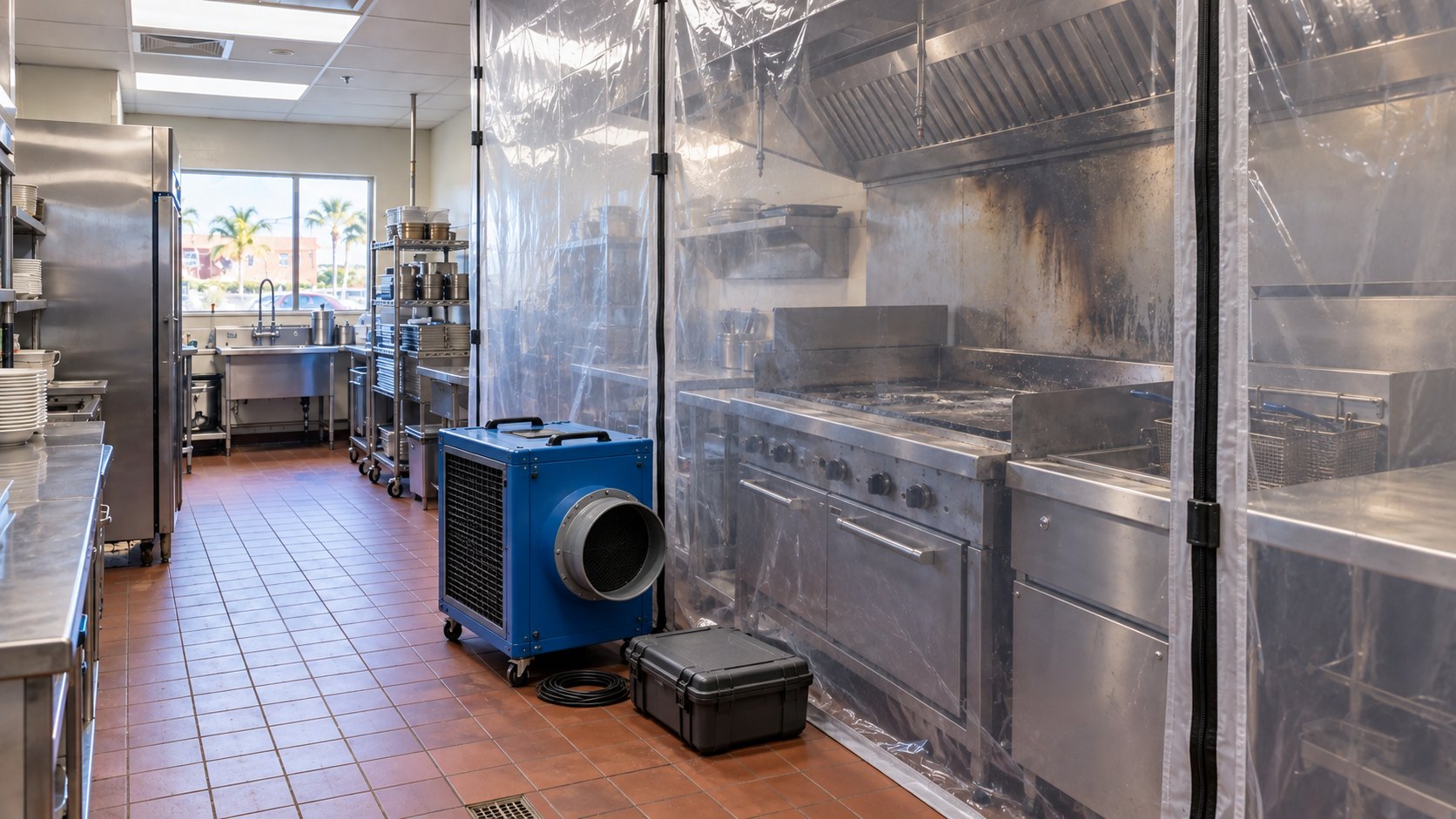
The process begins with an assessment of the affected areas, materials, contents, and apparent damage pathways. The goal is to understand what happened, what may have been affected beyond the visible burn area, and what information is needed before removal or cleaning begins.
A typical plan may address the following sequence:
- Establish safe work boundaries. Unaffected areas, tenant spaces, food storage, and customer areas may need protection or separation from the work zone.
- Document the condition. Photographs, item inventories, room-by-room observations, and moisture documentation help establish the scope before materials are disturbed.
- Separate contents and equipment. Items may be grouped for cleaning consideration, specialized evaluation, disposal decisions, or storage. An emergency packout can help protect contents from additional exposure during cleanup and reconstruction.
- Remove materials that cannot reasonably be cleaned. Demolition should be based on condition, contamination, material type, and the practical ability to restore the item—not simply on appearance.
- Clean affected surfaces and contents. The method depends on the residue, surface, porosity, amount of damage, and whether the item can tolerate the process.
- Address water-related damage. Moisture mapping and drying documentation help identify areas that need attention beneath or behind visible surfaces.
- Coordinate with repair specialists. Coordinate safe access, urgent stabilization, cleanup, repairs and equipment servicing with the relevant specialists. The sequence may change as conditions are uncovered.
- Document remaining limitations. Some contents, materials, or odors may require additional evaluation or replacement rather than routine cleaning.
Pinpoint’s fire and smoke damage cleanup service supports the cleanup and contents portion of this process in Las Vegas and the surrounding Vegas Valley. An on-site inspection helps establish the scope and identify questions that need a specialist’s input.
5. Understand commercial kitchen fire cleanup costs and timing
Commercial kitchen fire cleanup costs and timing depend on what was affected and what work is needed. The estimate depends on the size of the affected area, the type of residue, the contents involved, access conditions, and the number of specialists required.
| Cost or schedule driver | Why it matters | Information needed for an estimate |
|---|---|---|
| Fire and smoke spread | Damage beyond the point of origin can increase the number of rooms, surfaces, and contents requiring evaluation or cleaning. | Fire location, affected rooms, visible smoke migration, and photographs |
| Type and amount of residue | Grease, plastics, building materials, and suppression agents may require different cleaning methods or replacement decisions. | Description of materials burned and residue visible on surfaces or equipment |
| Water and suppression impact | Wet materials may require extraction, drying, monitoring, or removal in addition to smoke cleanup. | Areas with standing water, wet flooring, ceiling damage, and moisture observations |
| Kitchen equipment and ventilation | Appliances, hood systems, ducts, refrigeration, and controls often require separate specialist evaluation. | Equipment list, manufacturer information, service records, and visible damage |
| Contents and inventory | Food, packaging, furniture, records, and smallwares may need sorting, documentation, cleaning consideration, or disposal. | Inventory records, photographs, contents location, and condition |
| Access and operating constraints | Limited access, tenant coordination, security, and work-hour restrictions can affect sequencing and labor planning. | Property access rules, lease responsibilities, operating needs, and responsible contacts |
An estimate should clearly separate cleanup from reconstruction, trade repairs, equipment servicing, testing, and other professional services. That separation makes it easier to compare scopes and identify unanswered questions.
6. Document the work and coordinate reopening
Reopening is usually a coordinated decision, not a single cleanup milestone. Maintain a project file that includes:
- Fire department documentation and incident information
- Photos and videos taken before cleanup, when available
- Room-by-room damage notes
- Contents and equipment inventories
- Restoration estimates, work authorizations, and invoices
- Moisture documentation when water damage is involved
- Specialist inspection and repair records
- Testing or laboratory reports completed by independent providers
- Communications with the insurer, landlord, property manager, and authorities
- Records of discarded items and the reason for disposal
Notify your insurer promptly and ask how it wants the loss documented. Pinpoint can provide restoration documentation and may bill insurance directly for covered losses, but the insurer determines coverage under the policy. Do not assume that a cleanup estimate guarantees payment or that every affected item will be reimbursed.
The SNHD reopening guidance says to address the hazard and reopening-checklist items, then notify the district that the establishment is ready. The district gives permission to resume operations and may schedule an inspection depending on the incident. Keep that process distinct from cleanup completion, equipment-service signoff and any other required approvals.
For help organizing the cleanup scope or requesting a free, no-pressure estimate, contact Pinpoint Property Services. We can arrange an on-site restoration inspection and discuss the next steps. Providing photographs, the fire report, affected-area details, and a list of involved specialists can make the initial discussion more productive.
Frequently asked questions
Should cleanup start before the insurance adjuster arrives?
Notify your insurer and ask about its documentation process, but do not delay reasonable steps needed to protect people or prevent additional damage. Preserve evidence when practical, photograph conditions, and coordinate access with the responsible parties. Cleanup scope and insurance coverage are separate decisions, so beginning mitigation does not guarantee claim payment.
What happens to food after a commercial kitchen fire?
Do not attempt to wash exposed food and return it to service. USDA advises discarding food exposed to smoke fumes or firefighting chemicals; follow SNHD directions for your establishment. Safely record stock and disposal decisions. Whether equipment can be restored is a separate question for qualified equipment specialists.
Does Pinpoint repair kitchen appliances, electrical systems, or suppression equipment?
No. Pinpoint handles fire and smoke cleanup, contents work, and related restoration support. Qualified electricians, appliance technicians, HVAC or refrigeration professionals, and fire-suppression specialists must inspect and repair systems within their specialties.
Does Pinpoint perform air testing or clearance testing after cleanup?
No. Pinpoint does not perform environmental testing, laboratory analysis, air testing, or clearance testing. When testing is needed, use a qualified independent third party. Pinpoint also does not certify a property safe for occupancy or operation.
How long does commercial kitchen fire cleanup take?
Timing varies with the fire and smoke spread, water impact, residue, contents, access, testing needs, trade repairs, and authority coordination. A responsible estimate should identify the work sequence and the conditions that could change it rather than promise a fixed reopening date.
Who decides when the restaurant can reopen?
Contact SNHD for health-district permission to resume food operations after the hazard has been addressed. Also resolve any other applicable fire, building or equipment requirements. Pinpoint’s cleanup completion is not authorization to reopen.
LOCAL. CERTIFIED. READY TO HELP.
Need Property Restoration or Cleanup in the Las Vegas Valley?
Whether it’s water damage, mold, asbestos, fire and smoke, or a biohazard situation, Pinpoint Property Services can help you understand the next step.
Contact Pinpoint Property Services Today for a Free Inspection:

